Discovering biodiversity, one tree at a time
What can an old tree tell us about biodiversity? More than we might think. A tree cavity, a dead branch, loose bark or a crack in the trunk can provide shelter, food and nesting opportunities for birds, bats, insects and many other species. These small features, known as tree-related microhabitats, are often easy to overlook – but they can reveal a great deal about the ecological value of a landscape.
This is what is investigated in the Germany-based PlanBIO project, which invites people across Southern Brandenburg, to discover these hidden habitats and become part of a collaborative effort to better understand and protect biodiversity.
At EFI, we are leading the project’s communication and engagement activities and are keen to explore the potential of citizen science together with the project coordinator, the Research Institute for Post-Mining Landscapes (FIB). While EFI contributes its expertise in science communication and its broad Marteloscope network, with a strong focus on tree microhabitats, FIB brings extensive knowledge of landscapes affected by raw material extraction, particularly the former lignite mining areas of Lusatia. Together, we aim to connect these complementary areas of expertise to engage citizens and raise awareness amongst landowners and communities about how biodiversity protection can be strengthened, particularly in landscapes undergoing transformation.
Three landscapes, one shared goal
Having started in January 2026 and running for 3 years, PlanBIO focuses on three different environments: forests, urban green spaces and traditional orchards. Although these landscapes may look very different, they all provide important habitats for wildlife – including in places shaped strongly by human activity.
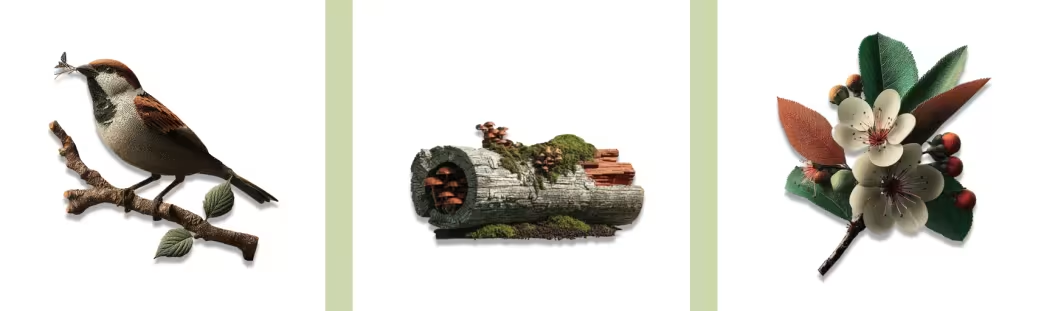
PlanBIO investigates forests, urban trees and agroforestry
In forests, old trees, deadwood and tree microhabitats can provide essential resources for species that depend on mature and structurally diverse habitats. In cities, parks, gardens and street trees can offer surprisingly valuable refuges for wildlife while also contributing to a healthier urban climate. Traditional orchards, meanwhile, combine cultural heritage with rich ecological value and support a wide range of plants and animals.
In the project, we focus particularly on landscapes in Southern Brandenburg that are undergoing change as a result of structural and socio-economic transformation after the mines were closed. If we understand better how biodiversity is distributed across these landscapes, this can improve future landscape planning and conservation.
From observation to knowledge
We assume that people do not need to be professional ecologists to contribute – this is why a central element of PlanBIO is citizen science. With curiosity, a smartphone and a willingness to look more closely, basically anyone can help document valuable structures on trees during a walk in the forest, a visit to a park or even in their own garden.
With the PlanBio App, citizens can photograph and record features such as tree cavities, loose bark, dead branches and other distinctive structures. These observations will then become part of a growing dataset that helps researchers in the region understand where valuable habitats occur and how they are distributed across Southern Brandenburg.
This is where the strength of citizen science lies: a single observation may seem small, but several observations made by many people can reveal patterns that would be difficult to capture otherwise. From EFI’s side, we will for example in 2027 organize a BioBlitz together with regional partners and communities, an intense period of biological surveying to record specific (or all living) species within a designated area.
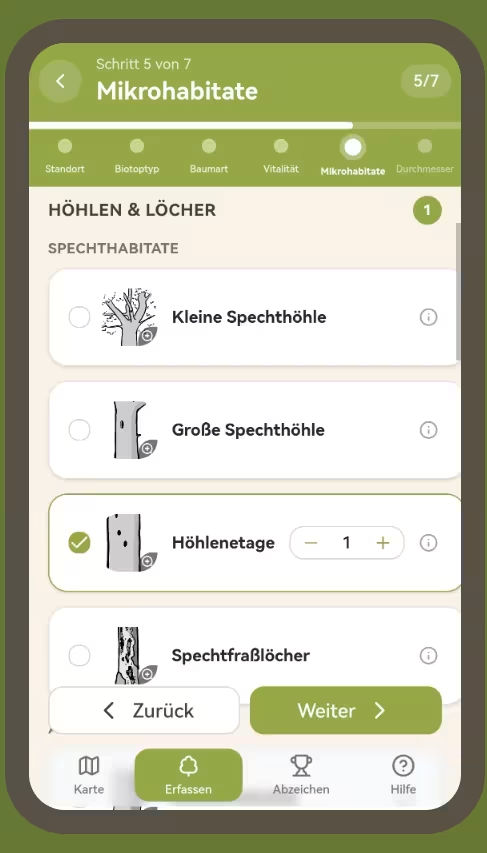
PlanBio App
Photo by:
Why trees matter for biodiversity
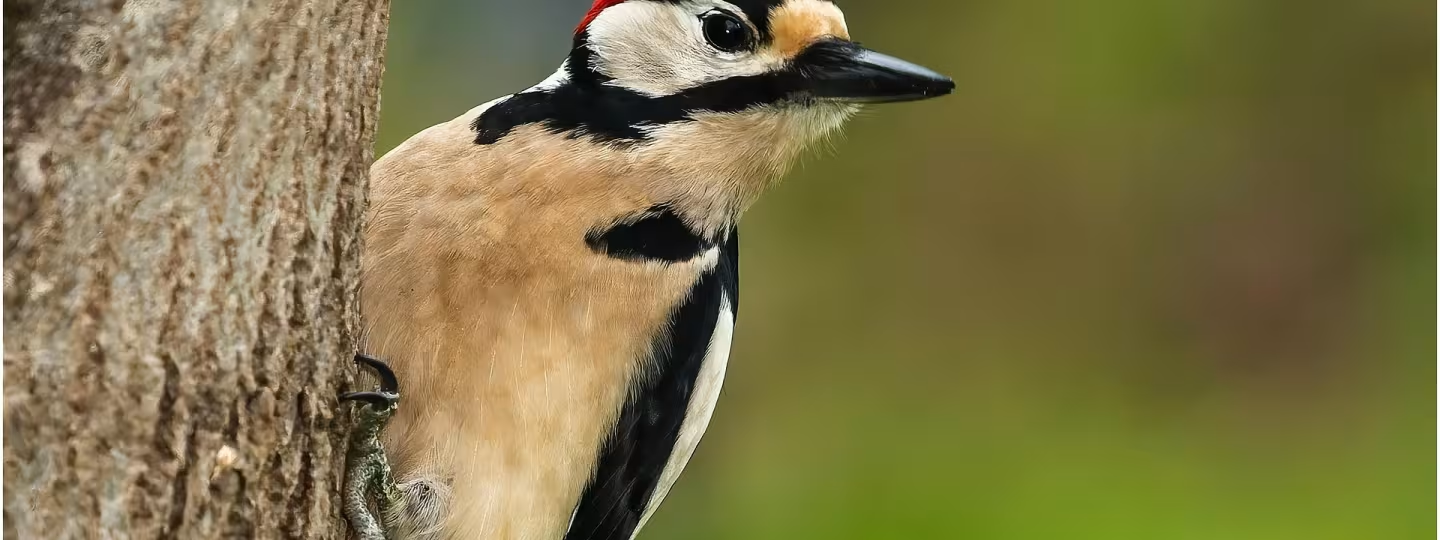
In PlanBIO, we want to raise awareness for the importance of tree microhabitats, and their close link to a wide range of species. Birds such as woodpeckers create cavities that may later be used by other animals. Bats can use cavities and cracks as temporary roosting places, while numerous insects depend on deadwood and decaying parts of trees.
These species can also tell us something about the wider health and diversity of an ecosystem. Birds and bats, for example, are often closely connected to the availability of food, nesting sites and shelter. Recording their presence alongside tree structures can therefore help build a more complete picture of biodiversity.
PlanBIO combines these observations to explore the relationships between trees, habitats and species – and to make this knowledge accessible beyond the scientific community.
Research with and for society
For us at EFI, our involvement in PlanBIO reflects the importance of connecting research with people and places and engaging different stakeholders not only in knowledge exchange but also collection. Biodiversity research does not only happen in laboratories or through large-scale monitoring programmes. It can also begin with a simple observation made during an everyday walk. With our activities, we also aim to make biodiversity more visible and understandable, helping build a stronger basis for future conservation, planning and sustainable landscape management.
The new PlanBIO website, launched now, provides information about the project, the three landscapes it investigates, and the different ways people can participate (in German). It also features a growing map of observations from southern Brandenburg, allowing participants to see how individual discoveries contribute to a much larger picture.
Every tree has a story. With PlanBIO, we invite people to look closer, discover those stories and help turn observations into knowledge for biodiversity.
Related content
PlanBIO
PlanBIO combines research and citizen engagement to improve biodiversity knowledge and inform conservation and landscape planning.
- Forests and people
How to measure your impact on nature: CircHive launches biodiversity footprinting guidance and decision tree
CircHive launches two resources to help organisations understand and measure their impact on nature.
- Forests and people
EFI Scientific Seminar 2026: Forest Frontlines: From Conflicts to Diplomacy
The seminar moved from understanding of forest conflicts to exploring tools and mindsets for conflict transformation and forest diplomacy.
- Inclusive governance