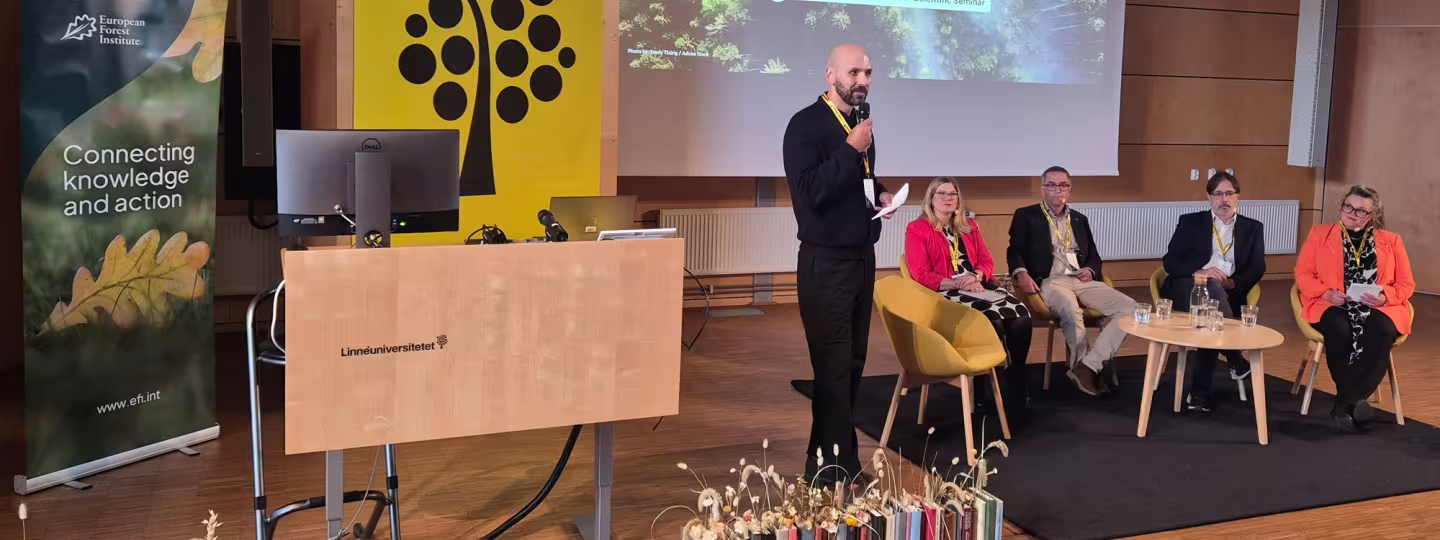
EFI Scientific Seminar 2026: Forest Frontlines: From Conflicts to Diplomacy
This year’s Scientific Seminar stepped beyond traditional forest science to explore a topic of fundamental interest. In "Forest Frontlines: From Conflicts to Diplomacy", diverse and inspirational expert speakers shared perspectives and experiences, taking participants on a rich and thought-provoking journey from a conceptual understanding of forest conflicts to exploring tools and mindsets for conflict transformation and forest diplomacy.
Held on 17 September 2026 at Linnaeus University in Växjö as part of the EFI Annual Conference, the seminar brought together participants from science, policy, practice and the next generation of forest researchers. Its starting point was a simple observation: Europe's forests are expected to deliver more than ever, from timber and bioenergy to biodiversity, carbon storage, recreation, cultural identity and livelihoods, and these demands increasingly meet on the same ground. Rather than treating the resulting conflicts as failures to be eliminated, the programme approached them as signals of overlapping and often equally legitimate claims, and asked what it takes to engage with them constructively.
Opening perspectives
Participants were welcomed with addresses from hosts Maria Engelbrektson and Peter Aronsson (Vice-Chancellor) of Linnaeus University and Robert Mavsar (EFI Director). Anders Persson (Linnaeus University) opened with a keynote on moving from conflicts to diplomacy.
Two young scholars, Jerbelle Elomina (BOKU University) and Antonio Basilicata (University of Freiburg), then set a personal tone for the day, each sharing the forest conflict that keeps them awake at night. Drawing on her PhD research on land-use conflicts in the European Arctic, Jerbelle showed why such conflicts are so hard to resolve: beyond tangible disputes over land access, competing uses and cumulative pressures, they carry a subjective dimension. Antonio turned to the debate over the EU Nature Restoration Regulation, where a question of land use grew into arguments about sovereignty, the rule of law and responsibility for nature.
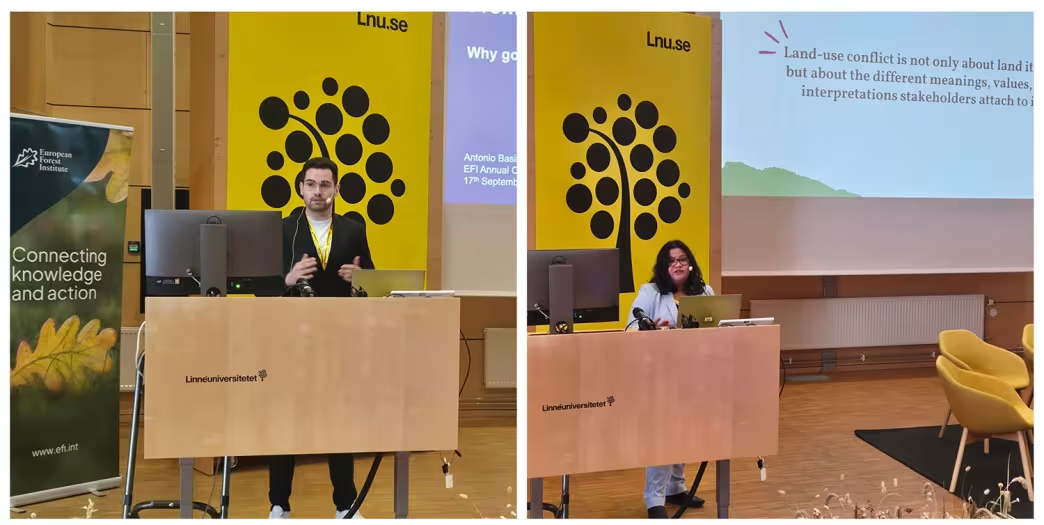
Photo by:
Sarah Adams
Seeing forest conflicts
The first block, Seeing forest conflicts, laid the conceptual groundwork. Annette Löf (Stockholm Environment Institute) asked what a forest actually is, exploring pluralistic landscapes, overlapping rights and the dynamics of conflict in forest governance. In a pre-recorded keynote, Agata A. Konczal (Wageningen University) brought a political ecology perspective, showing how power and narratives shape which conflicts become visible and whose framings prevail. Over coffee, Raghav Sharma (International Forestry Students' Association) and Albert Seitz (Croatian Forest Research Institute), collected impressions from participants: What is the forest conflict that keeps you up at night?
Negotiating forests
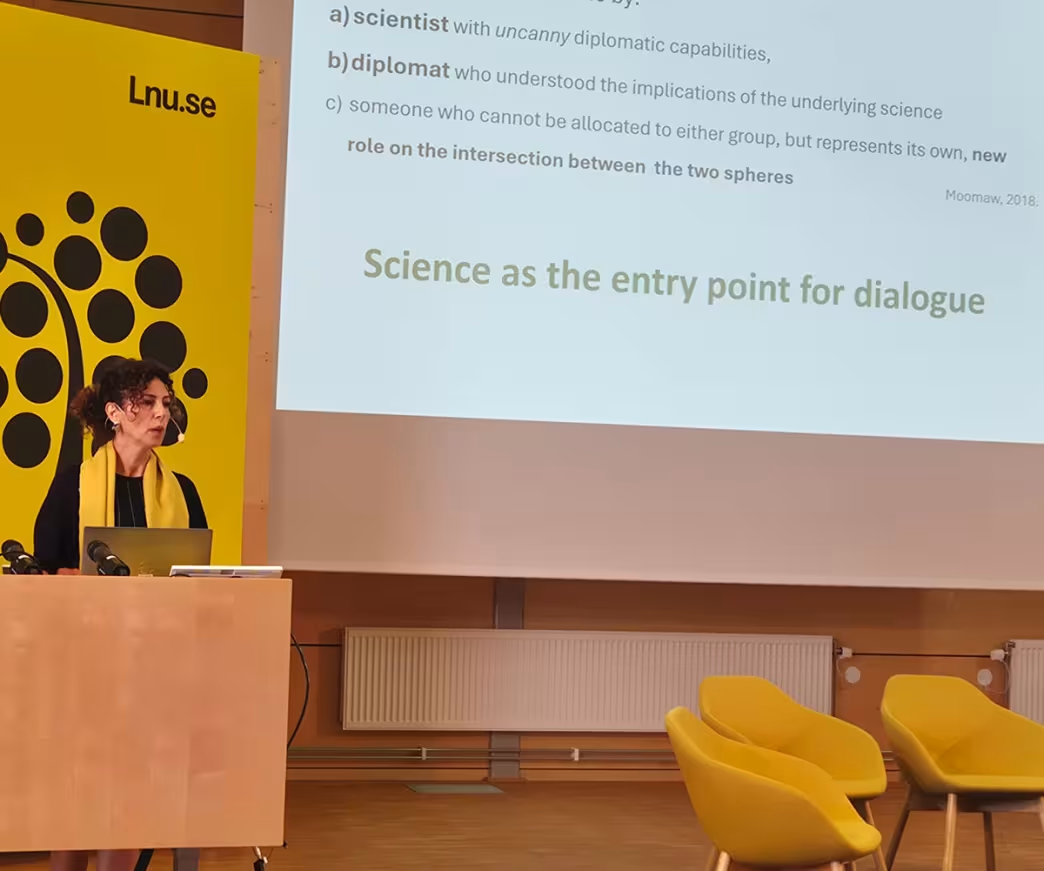
Photo by:
Sarah Adams
The second block, Negotiating forests, turned to diplomacy. Magda Bou Dagher Kharrat (EFI Mediterranean and Saint Joseph University of Beirut) drew on her experience coordinating cross-border research across the Mediterranean to show how scientific collaboration can become a form of forest diplomacy, and what that means for communicating across conflict lines. An open exchange with all keynote speakers followed, before the youth representatives presented "What keeps this room awake", distilling the concerns participants had shared during the break. The morning closed with Gold and Green Forests, a PechaKucha by Anna-Karin Arvidsson (Linnaeus University) presenting an artistic research project.
From analysis to practice
In the afternoon panel, Negotiating forests: from conflicts to diplomacy in practice moderated by Alex Giurca (EFI), panellists Mia Crawford (Federation of Swedish Family Forest Owners), Ola Kårén (SCA), Zoltan Kun (Wild Europe Foundation) and Annette Löf (SEI) each took the audience inside a conflict they had personally been part of: what they tried, what worked, and what did not. Speaking from the perspectives of family forest owners, industry, conservation and research, they discussed what happens when the people you represent disagree among themselves, and what researchers and policymakers most often get wrong about how conflicts play out in practice. Each panellist closed with one concrete tool for the audience to carry forward.
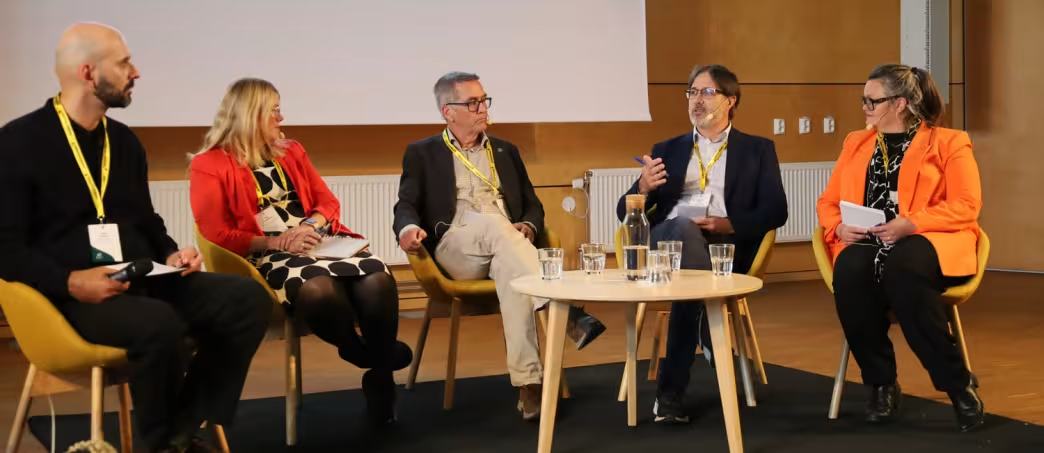
Photo by:
Shanqing Gao
Participants then put those tools to work. In an interactive session facilitated by Sarah Adams (EFI), groups tackled two contemporary conflicts: wildfires that cross borders and conflict lines, from southern Europe to Canada, and competing land uses in Sápmi, where Sámi reindeer herding meets industrial forestry. Midway through, a twist card changed each scenario, shifting alliances, raising the stakes and forcing groups to rethink who needed to talk to whom.
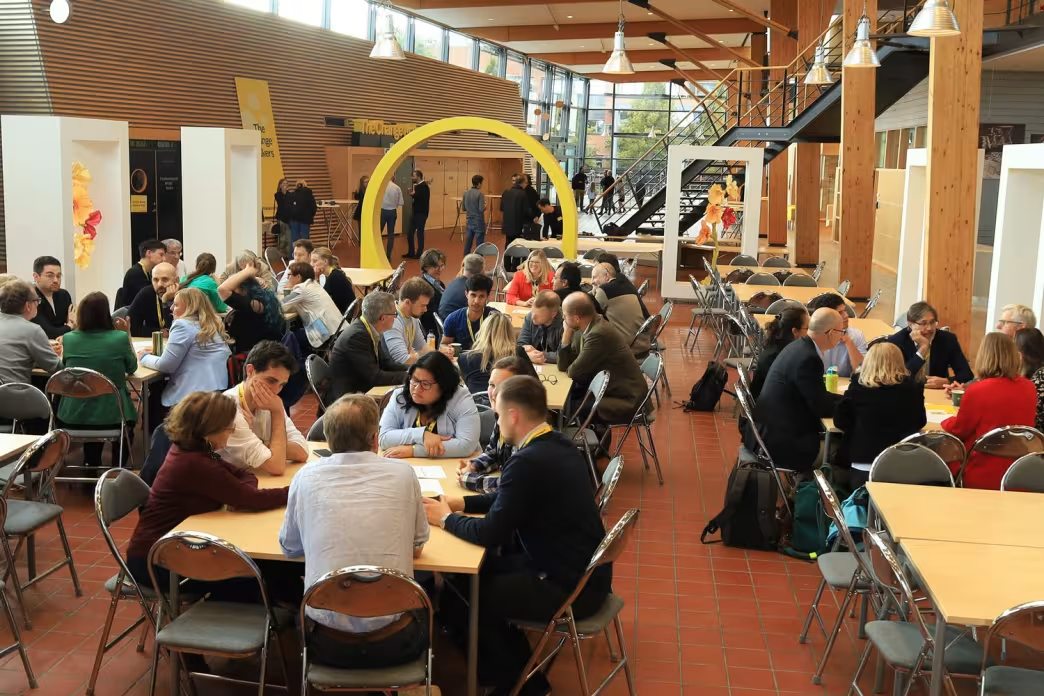
Photo by:
Shanqing Gao
Maria Engelbrektson closed the day by drawing together its threads. If the seminar offered no single recipe for resolving forest conflicts, it made a compelling case that understanding them starts with taking competing claims seriously, and that diplomacy is less a destination than a practice: keeping channels open, especially when agreement is out of reach.

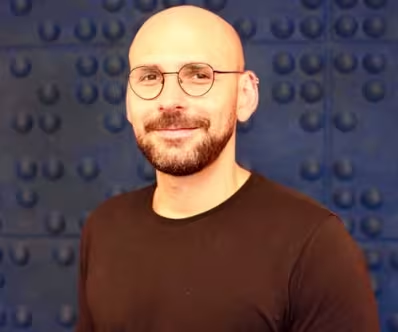
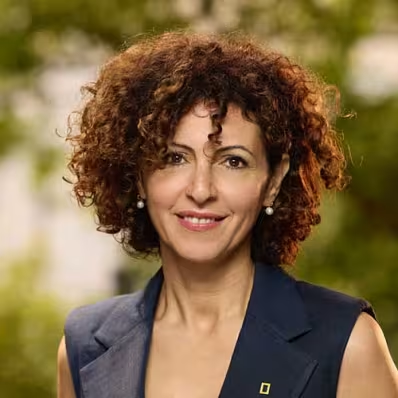
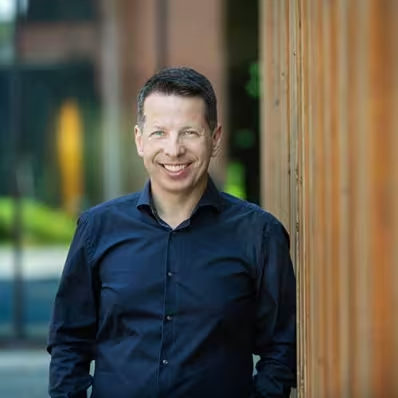
EFI seminar speakers
Related content
EFI Strategy 2040 – Forests in a changing world
EFI has launched a major new strategy which will shape the work of the Institute over the next 15 years.
- Resilient forests

Wildfires are Europe’s new normal: why we urgently need to act
EFI experts urge moving from managing each fire as an isolated emergency to managing fire risk across landscapes and throughout the year.
- Resilient forests
Discovering biodiversity, one tree at a time
Discover how tree microhabitats reveal biodiversity – and how citizen scientists in Germany can help protect it with PlanBIO.
- Forests and people