PlanBIO
Connecting biodiversity research, citizen science and landscape transformationThe PlanBIO project, coordinated by the Research Institute for Post-Mining Landscapes (FIB), demonstrates how research and citizen engagement can be combined to strengthen biodiversity knowledge and support more informed approaches to conservation and landscape planning. Focusing on Southern Brandenburg, Germany, the three-year project investigates the ecological value of tree-related microhabitats and their role in supporting biodiversity across landscapes undergoing significant environmental, social and economic transformation.
The European Forest Institute (EFI) leads the project’s communication and stakeholder engagement activities, supporting the effective exchange of knowledge between researchers, citizens, landowners, local communities and other relevant stakeholders. EFI contributes its expertise in science communication, citizen engagement and tree microhabitats, complemented by its extensive Marteloscope network. The Research Institute for Post-Mining Landscapes (FIB) contributes its specialised expertise on landscapes affected by raw material extraction, with a particular focus on the former lignite-mining areas of Lusatia. Together, the partners are connecting complementary areas of expertise to strengthen understanding of biodiversity and promote its consideration in future landscape development.
Launched in January 2026, PlanBIO focuses on three landscape contexts: forests, urban green spaces and traditional orchards. These environments provide diverse habitats for species while also reflecting different forms and degrees of human influence and landscape change.
Citizen science is central to the project’s approach. Through the PlanBIO App, participants can document tree-related microhabitats, including cavities, dead branches, loose bark and cracks, alongside observations of species such as birds, bats and insects. Aggregated observations will contribute to a regional evidence base, helping researchers identify patterns in habitat and biodiversity distribution. By linking research, citizen-generated data and stakeholder engagement, PlanBIO aims to translate local observations into actionable knowledge, supporting biodiversity conservation, sustainable landscape management and more inclusive approaches to landscape planning.
Related content
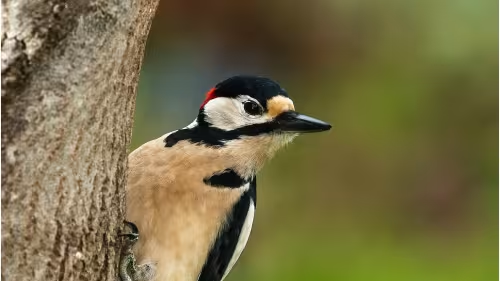
Discovering biodiversity, one tree at a time
Discover how tree microhabitats reveal biodiversity – and how citizen scientists in Germany can help protect it with PlanBIO.
- Forests and people
Natura Sud-Est
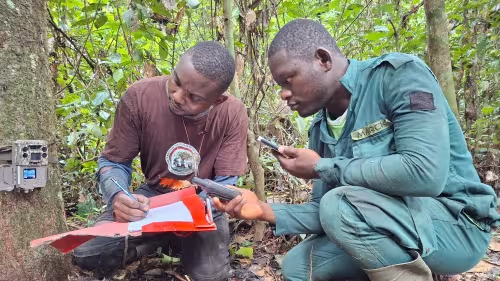
We support Cameroon’s efforts in sustainable natural resource management and climate change mitigation.
- Inclusive governance
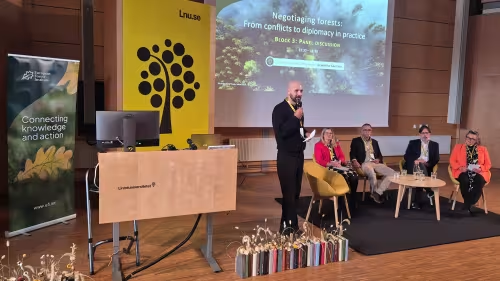
EFI Scientific Seminar 2026: Forest Frontlines: From Conflicts to Diplomacy
The seminar moved from understanding of forest conflicts to exploring tools and mindsets for conflict transformation and forest diplomacy.
- Inclusive governance