How are we preparing foresters and forestry professionals for the future?
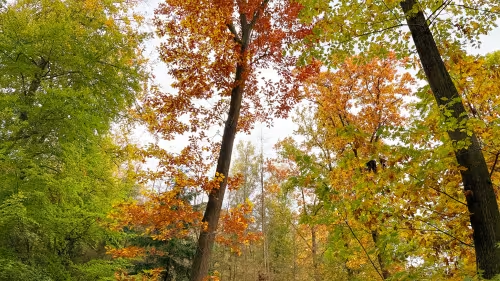
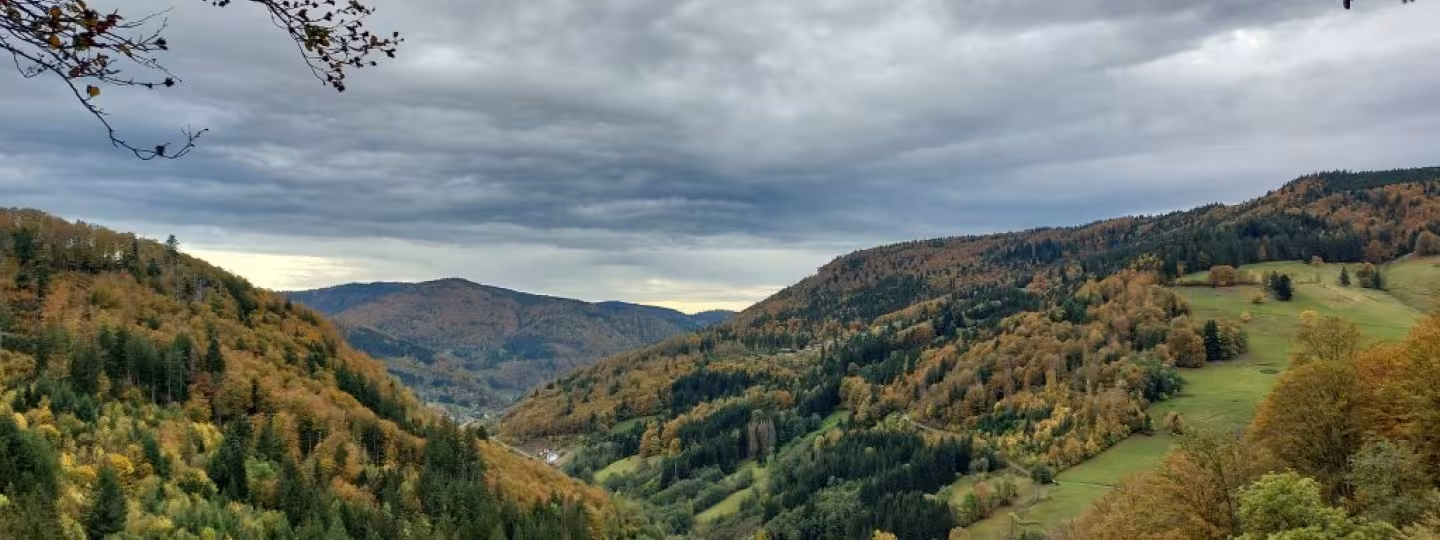
One of the best things about teaching forest sciences at the University of Freiburg is that the classroom is just a short trip from two very different forest landscapes. To the west lies the Rhine Valley, one of Germany's warmest regions and a hotspot of climate change. Here, drought, forest disturbances and invasive species are increasingly challenging the very survival of forests and their biodiversity. Timber production has become a secondary concern for most owners. To the east lie the mountains of the Black Forest, and the challenge of adapting forests to global change looks quite different: How can we manage forests to become more diverse in tree species and structures, better prepared for global change, and still capable of producing high-value timber?
We enjoy taking students into these landscapes because they reveal a fundamental truth: future forest managers will rarely face one problem with one obvious solution. And these challenges extend far beyond Freiburg. Across Europe, forests are confronted with increasing stress and disturbances while society expects them to provide wood, conserve biodiversity and deliver many other ecosystem services.
This is also the challenge behind Integrative Forest Management (IFM), an approach that integrates biodiversity conservation and adaptation to global change into forest management to sustainably provide wood and multiple other ecosystem services. But if we expect the next generation of European foresters and forestry professionals to balance these demands, are we teaching them the skills to do so?
In our recently published study “From Concept to Curriculum and Competencies: Results of a Survey on Teaching of Integrative Forest Management at Higher Education Institutions Across Europe” published in Current Forestry Reports, conducted within the HorizonEurope-funded TRANSFORMIT project, we explored this question. Drawing on a survey of 39 forestry educators from 36 higher education institutions across 31 European countries, we investigated how IFM is taught and which skills educators consider essential.
What are we teaching, and what is missing?
The encouraging news is that many foundations are already in place. Educators prioritised natural regeneration, site-adapted tree species, selective harvesting, diverse forest structures, and retaining habitat trees and deadwood. They also considered these principles relatively well covered in their teaching curricula.
Yet our findings revealed an important challenge: IFM is often taught in fragments rather than as a connected approach. Around two-thirds of respondents reported that IFM-related content is spread across existing courses rather than taught in dedicated modules. Dedicated modules could bring these elements together, helping students see how IFM principles and competencies connect.
This matters because managing forests under uncertainty requires more than technical expertise. Educators highlighted the importance of resilience and systems thinking, the ability to integrate knowledge across disciplines, communication with society, and innovative problem-solving. Our review identified working together to solve complex problems as a particular area for improvement.
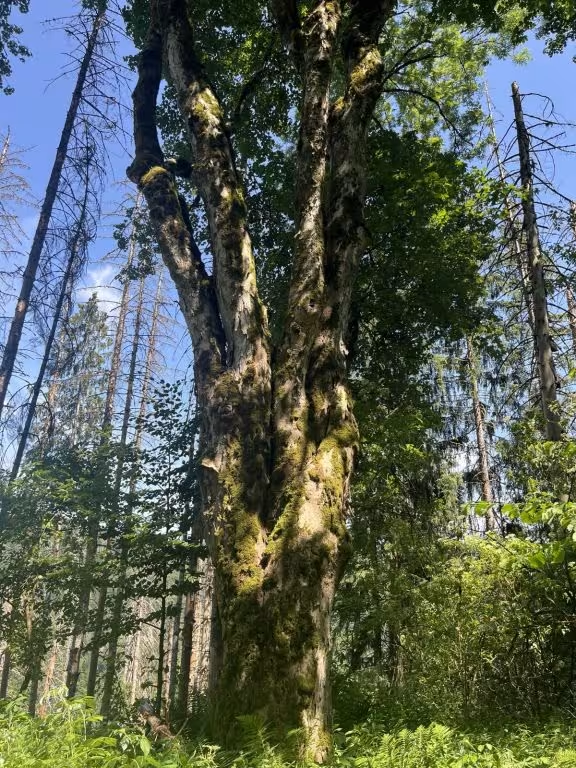
Large and old trees provide important habitats for biodiversity - from insects to mosses, from birds to fungi.
Photo by:
Florian Schnabel
Bringing real-world challenges into the classroom
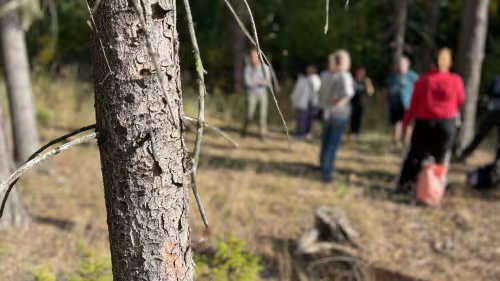
So how can we better prepare Europe's future foresters and forestry professionals? One promising approach is to confront students with real management dilemmas. Rather than simply explaining adaptation strategies in a lecture, we can ask them to develop management options for a disintegrating forest in the Rhine Valley or a forest enterprise in the Black Forest that produces high-value timber. Students must weigh competing objectives, discuss possible solutions and defend their decisions. This is the approach we take in our Master's course Forest Adaptation and Close-to-Nature Management, part of the Future Forests profile in the MSc Forest Sciences, supported by TRANSFORMIT and our Future Forests Cluster of Excellence.
Such practical, problem-based learning, that centers critical and systems thinking, can help students connect knowledge across disciplines and learn to navigate uncertainty. Equally important, our findings highlight opportunities for collaboration among European universities. Almost half of the surveyed educators expressed interest in sharing teaching materials and experiences.
There is no single recipe for managing Europe's forests under global change. But by bringing real-world challenges into the classroom and learning from experiences across Europe, we can better prepare future foresters and forestry professionals to make informed decisions in an uncertain world.
Read more about TRANSFORMIT, which is coordinated by EFI.

Related content
The forest that refused the rulebook
Journalists, scientists and forest experts explore how different perspectives shape decisions on forest health and post-disturbance management in…
- Forests and people
Mapping Lebanon’s hidden insect world, one barcode at a time
Lebanon DNA study of 58,000 insects finds over half the species may be unique to the Eastern Mediterranean.
- Resilient forests
FOREXT Fridays: Payment for Ecosystem Services
Explore practice-oriented PES experiences, from implementation and challenges to lessons for forest advisors and organisations.
11 December 2026, 13:00–14:00, CET
- Resilient forests