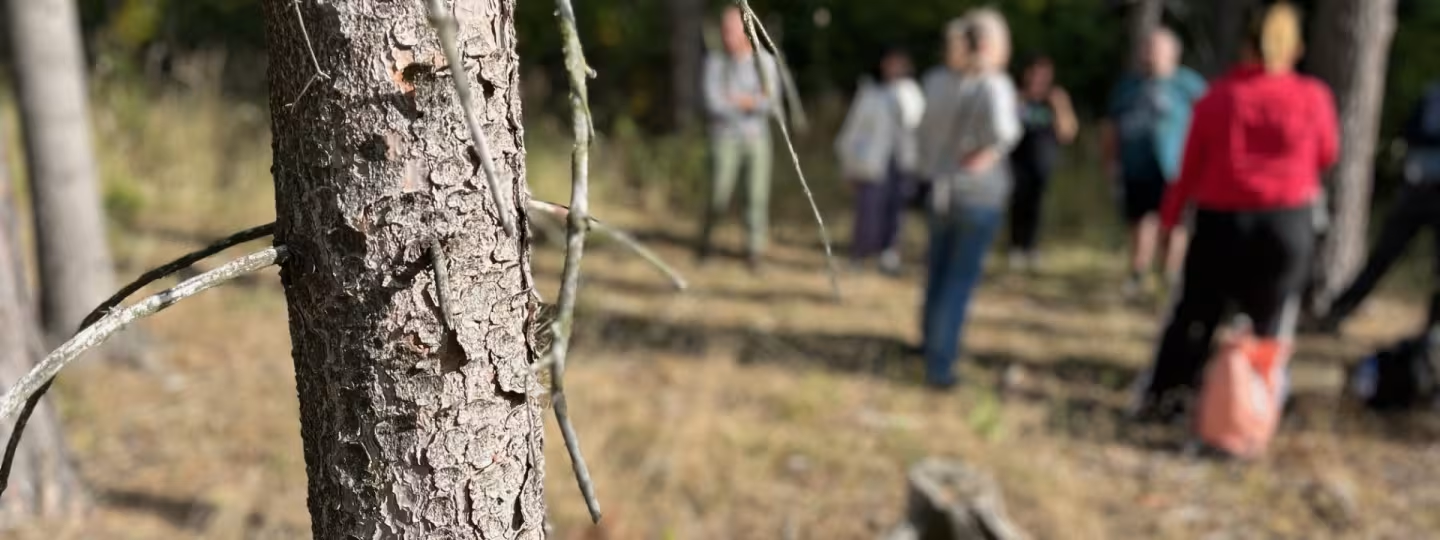
The forest that refused the rulebook
How a Czech forester challenges conventional approaches to forest restorationWhat is the “right” thing to do with a forest after a disturbance? How do different groups define a “healthy” forest? When does intervention feel necessary – and when might non-intervention be the better choice? These questions brought us together with seven international and Czech journalists to visit a very special forest site called Velká Bíteš in the Monravia region, Czech Republic, as part of the EFI-coordinated TRANSFORMIT project.
Joined by researchers, policy makers and forestry practitioners, we wanted to explore scientific, managerial, ecological, and societal perspectives to better understand and respond to changing forests. On a sunny early-autumn day, our local guide and forest manager, Jiří Nohel, provided us with an insightful excursion to several stops, where every forest stand told its own story.
First stop: conventional disturbance management
Eight years ago, a bark beetle outbreak swept through this part of the Czech landscape – an area formerly dominated by spruce and pine forests, which used to be economically successful for decades. We started our excursion with a visit of a site that was not managed by Jiří but dealt with in a more conventional way: Much of the area was clear-cut after the disturbances, followed by an expensive effort to replant it. More than €20,000 per hectare was spent on reforestation here, Jiří told us. However, the first thing we noticed was how difficult it was to call this area a forest. Besides some standing spruce deadwood, we could see mostly grass. Some planted beech trees stood there rather alone – they had suffered from the drought and heat this year – and as a shade-dependent species, generally struggled in these open, dry conditions. “From an ecological perspective, this simply is not a good place for these species to thrive,” said Jan Hofmeister, assistant professor and forest ecologist from the Czech University of Life Sciences.
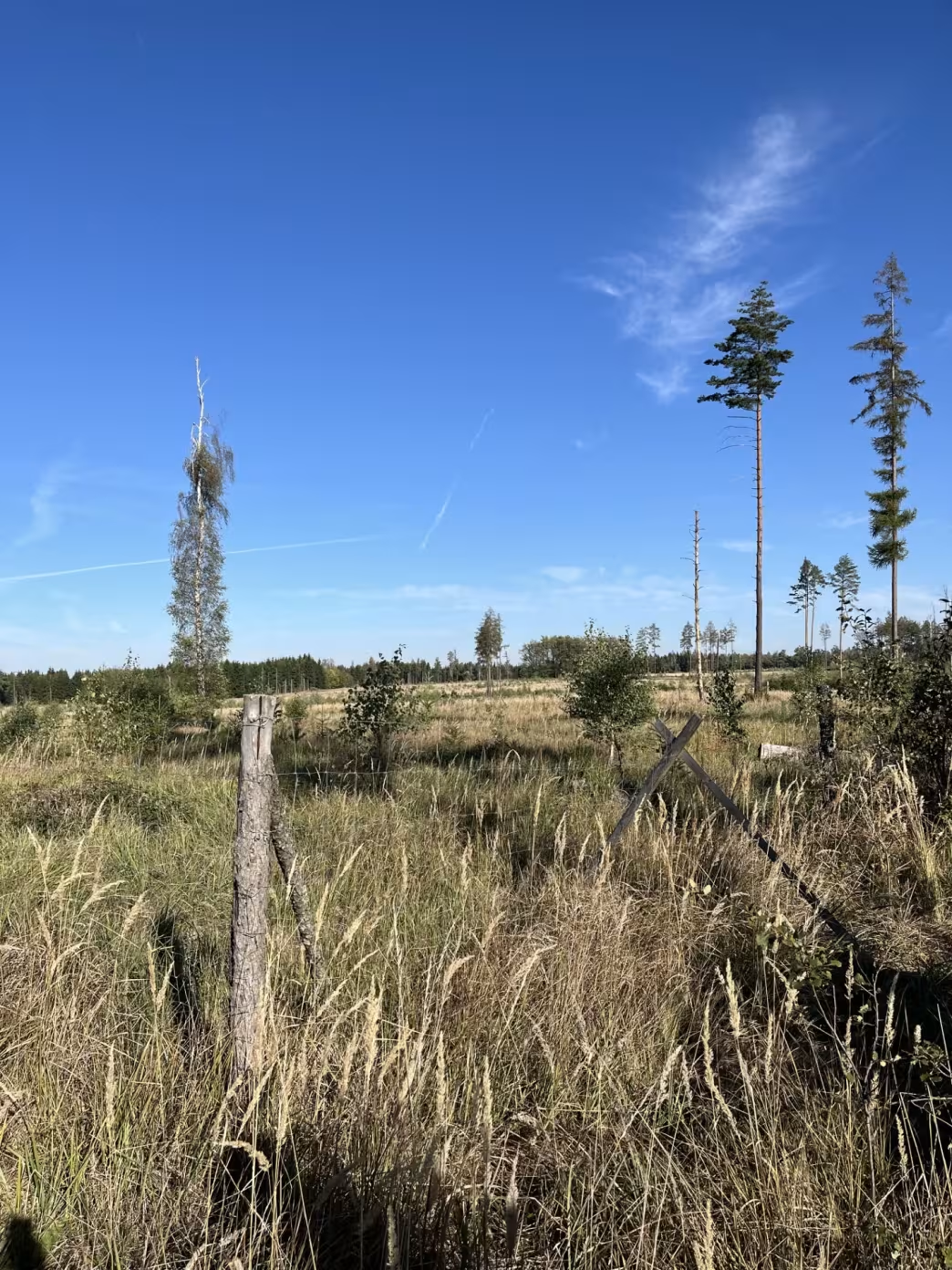
"From an ecological perspective, this simply is not a good place for these species to thrive." (Jan Hofmeister, forest ecologist)
Photo by:
Gesche Schifferdecker
Standing here with Jiří and the group of people from across the world, we began to understand that the story was not really about a drought that was followed by bark beetle attacks. Rather, it was about how we may respond to disturbances, once they happen to our landscapes.
“Nature lives in cycles,” was the message we took away from our conversation at the first excursion stop. Yet forestry in Czechia had tried to break those cycles, Jiří emphasized. As a forest manager, he looked at the forest disturbance problem differently from the more conventional forestry model. And, more importantly, he had been willing to act on that difference.
Second stop: deadwood for life
At our second stop, the contrast was striking. This land belongs to seven communities and the city and is managed by Jiří. Around 70 percent of the forest was logged after the bark beetle calamity. However, at the time, in 2019/2020, damaged trees could be sold for as little as €5 each. Jiří made an unusual decision: rather than investing heavily in tree planting, also called “artificial regeneration”, he left much of the forest to regenerate naturally.
This decision was not popular.
For several people accustomed to managing forests through planting, clearing and controlling, simply leaving the forest alone looked like neglect. Jiří was worried he would regret his decision: “I have been praying that it would work”. Eight years later, there was no remorse, but pride that he managed to stick to his plan.
On that site, Birch had taken the lead. Young broadleaf trees were emerging beneath it. The forest was becoming more structurally diverse, and with that diversity came greater resilience to drought, said Jiří. Dead trees stood and laid across the landscape. At first glance they looked like waste. But Jan explained their role: deadwood stores carbon, feeds ecosystems and creates habitat. Birds use the dense birch layer. Browsing animals like row deer encounter natural obstacles. This enables for example little oaks to grow, whose leaves would have otherwise been eaten.
We also discussed some trade-offs: standing deadwood is dangerous for people to walk past, as it can fall at any moment. Hence, this forest was not inviting us to enter. “But maybe humans can accept that every now and then – for the forest to thrive”, said Miroslav Svoboda, Professor for Forest Ecology at the Faculty of Forestry and Wood Sciences, Czech University of Life Sciences Prague and scientific supporter of Jiří’s work. For upscaling this approach the safety issues for visitors might be a hurdle – but we did wonder: when seeing and being educated on the value of deadwood for nature to truly recover, may humans accept such a limitation in certain locations?
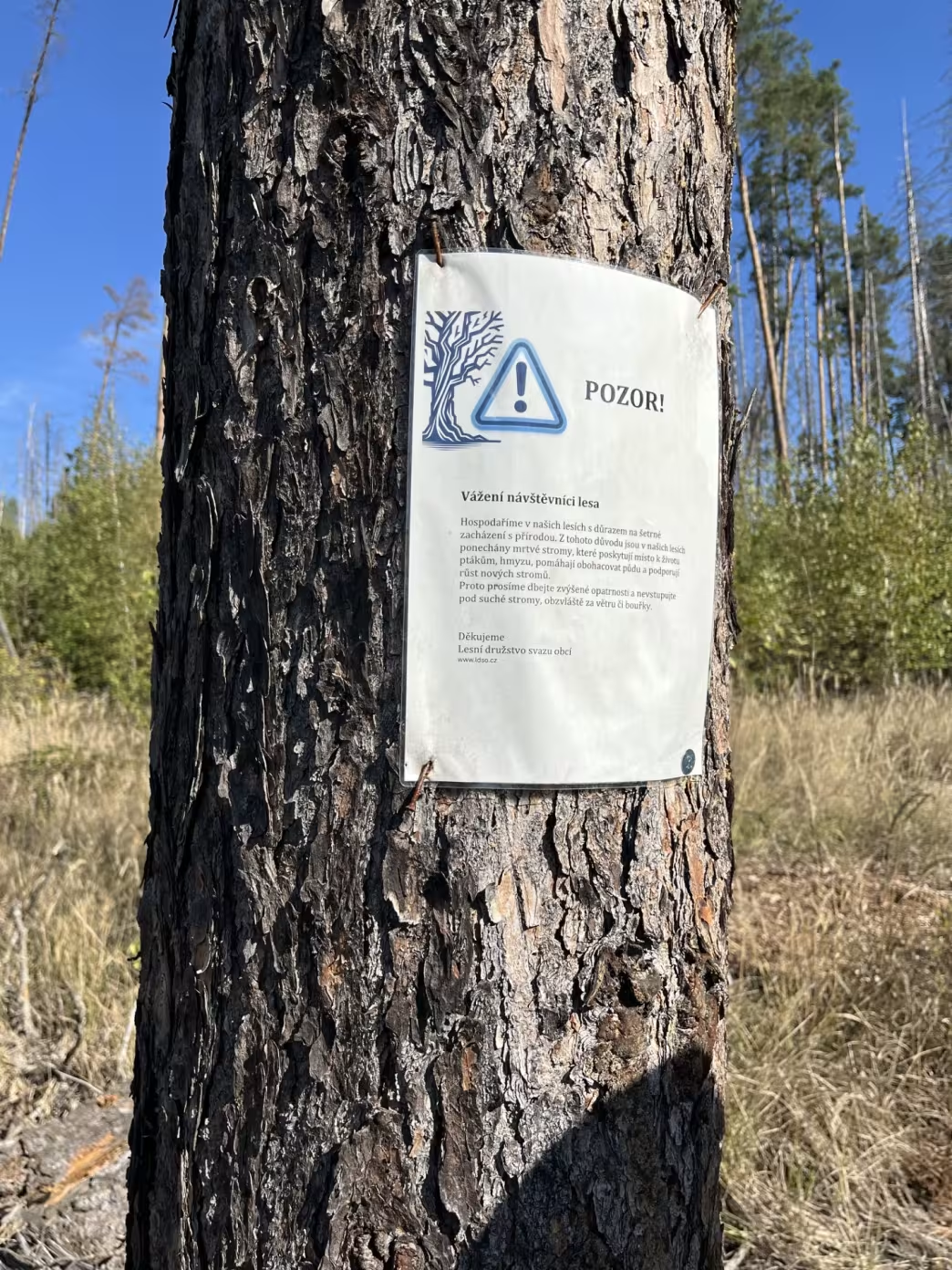
Trade-off: standing deadwood is dangerous for people to walk past.
Photo by:
Gesche Schifferdecker
Third stop: a haven for biodiversity
At the third stop, Jiří 's experiment felt even more radical. In a community of only 50 inhabitants, he asked local decision makers to trust his approach. Instead of removing every spruce affected by the bark beetle, he left them standing.
Now the results were visible everywhere.
Birch, willow, oak, beech, ash, cherry and silver fir were appearing naturally. Jiří’ said that lynx and wolves have been spotted, and that locals identified a big owl moving through the landscape. Later, we learned that all the maple and oak trees across this 40-hectare area originated from just two maple and two oak trees. Nature, it seems, has its own surprisingly efficient distribution system.
In general, Jiří calls for horses and tractors rather than intensive machinery where possible, and plans to leave around 20 percent of trees after harvesting to decay and provide havens for biodiversity. When talking about harvesting, Jiří made clear: his decision not to intervene was also an economic one. He wanted to save costs both for the state and the local community, costs for wood extraction and replanting. However, his approach to forest management is also aimed at wood production, with an integrative approach to simultaneously promote biodiversity and forest resilience.
Walking through the forest, we realized that Jiří 's approach was not really “doing nothing.” He had chosen not to fight natural processes, but to work with them.
Fourth stop: into the wilderness
At our final stop, every few metres seemed to reveal another surprise. “This forest society is overflowing with life,” Jiří said, proud and smiling. It was obvious: pine trees at the top level, standing deadwood everywhere, young birches, maples and cherries, five-metre-high trees that did not exist here a few years ago, and even a black stork nest. It was the “wildest” forest many of us had ever seen. “This is one of the very few forests in the Czech Republic where no salvage-logging took place”, Miroslav told us. He also shared an anecdote that he had visited this forest with managers who follow a “close-to-nature” approach. “This forest was way too wild for them,” the professor laughed.
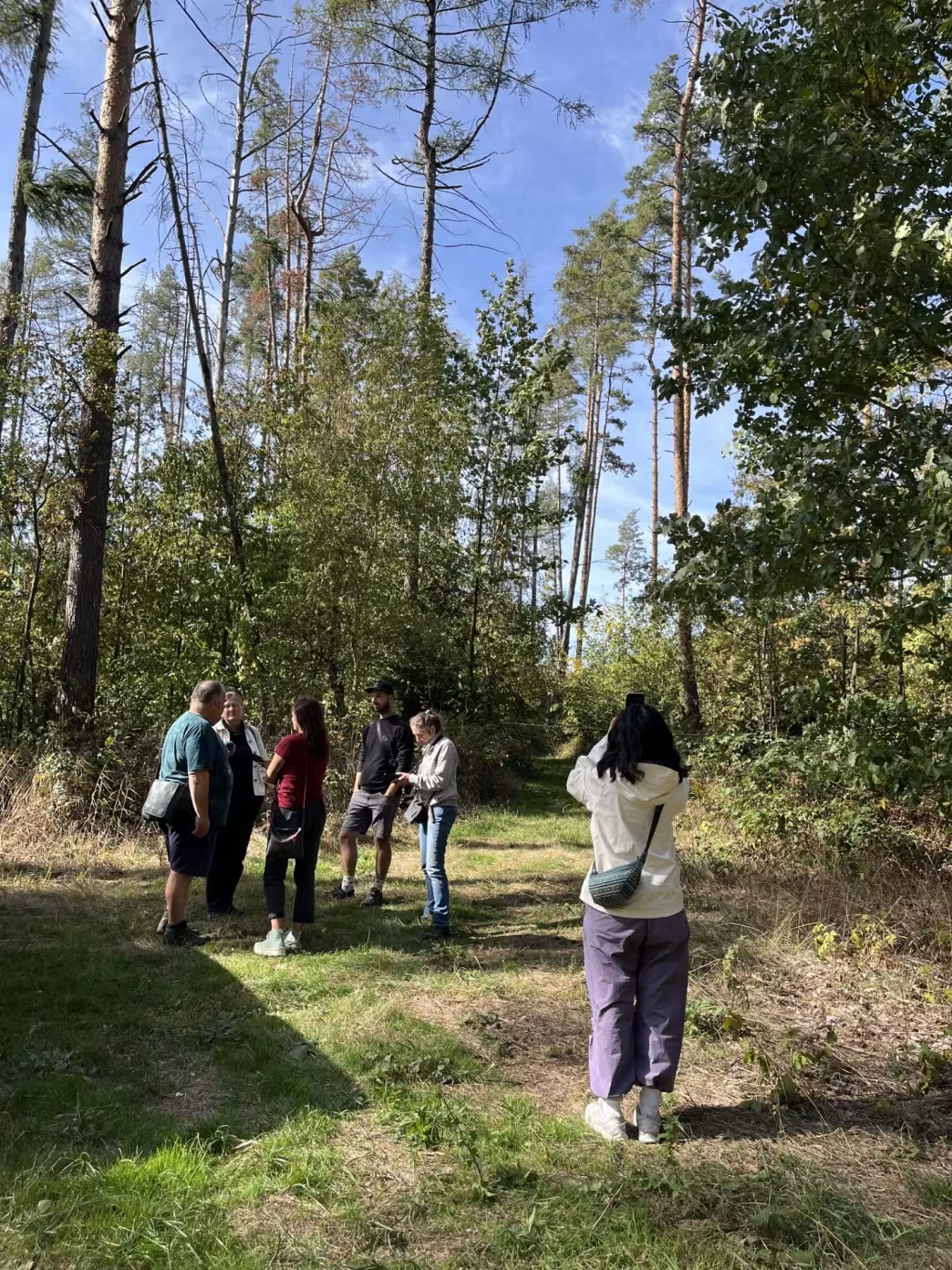
Journalists interview Jiri before the group enters the wilderness.
Photo by:
Gesche Schifferdecker
Finally, our guide left us with some food for thought: “Although timber is a great material and resource, everything that we use for living is over-dimensional,” Jiří said. This is why he is an advocate of a circular, bio-based economy and zero-growth.
When we left the forest, I suddenly had the feeling that Jiří’s most remarkable quality is not that he knows exactly what the forest will become. It is that he is prepared and willing to give it enough space to find out for itself.
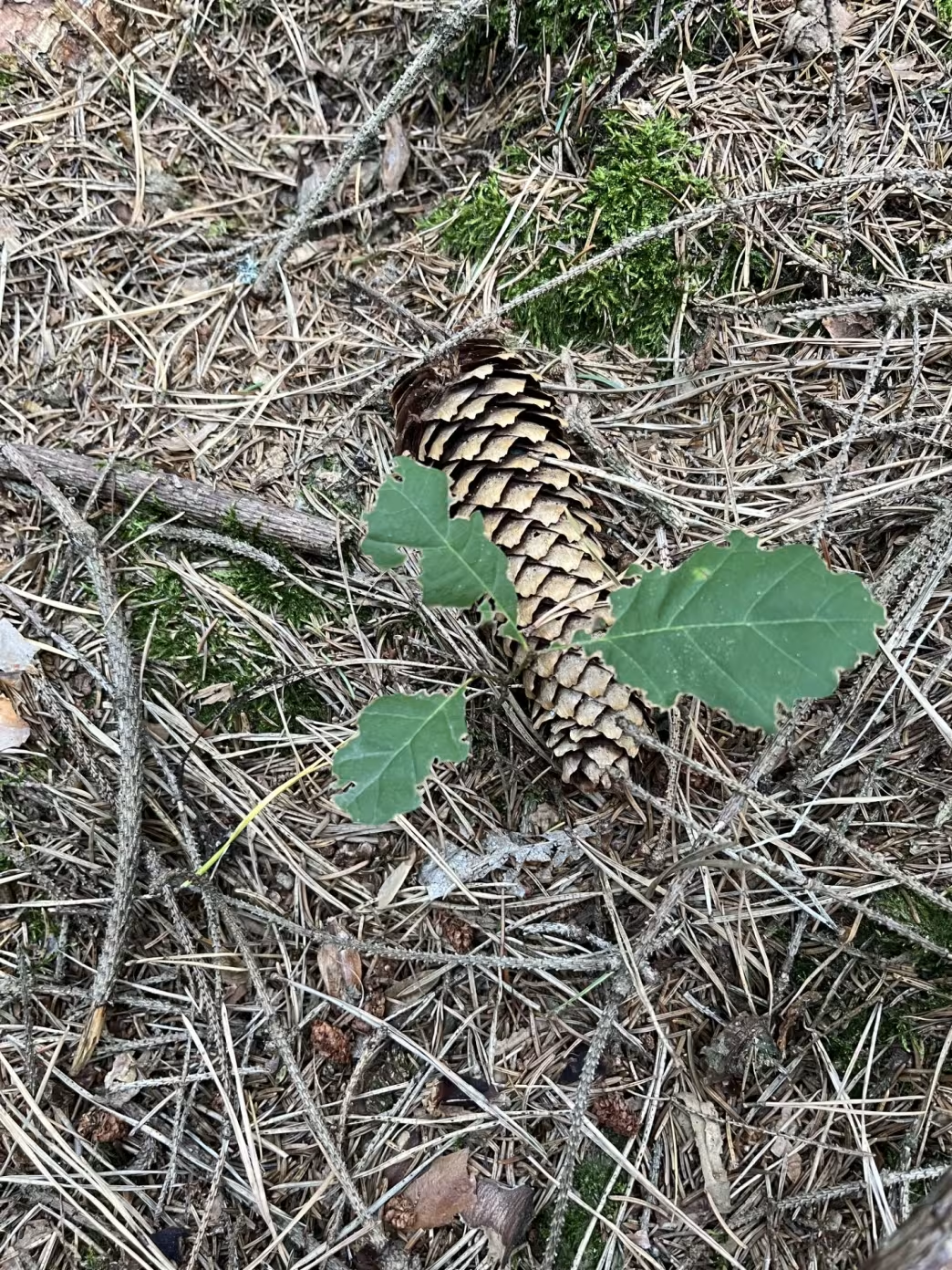
With enough light in the forest, oak can regenerate naturally.
Photo by:
Gesche Schifferdecker
Related content
De mémoire d’arbre: five centuries through the eyes of a tree
To celebrate World Book Day, Magda Bou Dagher Kharrat, Principal Scientist at EFIMED, recommends one of her recent favourite reads.
- Forests and people
Mapping Lebanon’s hidden insect world, one barcode at a time
Lebanon DNA study of 58,000 insects finds over half the species may be unique to the Eastern Mediterranean.
- Resilient forests
EFI Strategy 2040
Responding to accelerating global change, EFI positions forests at the heart of efforts to build resilient societies and a healthy planet.
- Resilient forests