What is culture-based climate action and why does it matter for forests?
Culture-based climate action focuses on engaging culture’s role in building long-lasting socio-ecological resilience and driving transformation. The culture-based climate action agenda, with its declaration launched at COP28, is aimed at integrating culture – including arts, heritage, indigenous and traditional knowledge and practice – into action to address both climate and biodiversity crises.
As writes Culture for Climate Scotland, culture is “a repository of adaptive knowledge, a communicative force that engages people, and a means of influencing values and behaviours”. Also, culture-based climate action can “ensure that climate strategies are people centered and socially just, rooted in the lived values and practices of communities”.
At EFI, we actively aim to integrate artistic practice and local perspectives into scientific work and research on forest-related issues. This includes Open Calls, webinars, toolkits, partnerships, events, and dialogue spaces where the value of culture for and within forests is acknowledged.
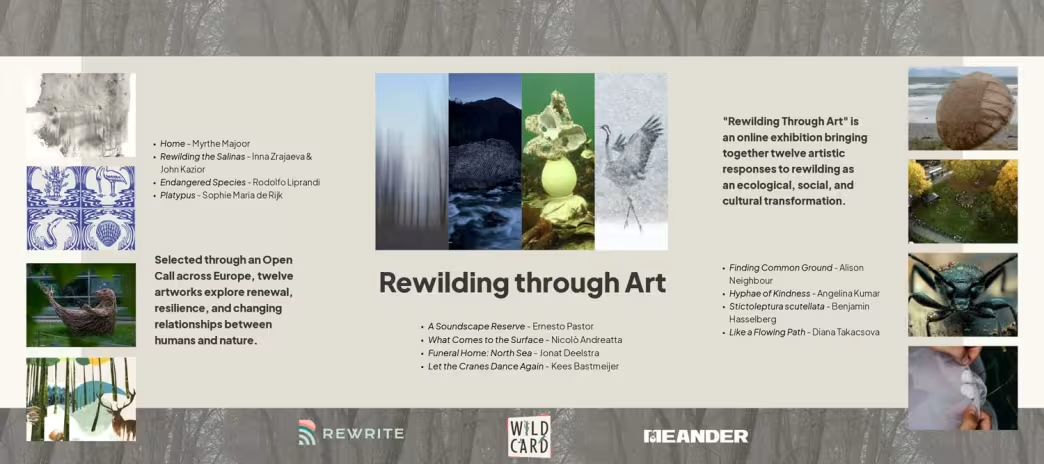
12 Selected Artworks of the ‘Rewilding through Art’ Open Call
Within an EU-funded research project called WILDCARD – aimed at revealing the contribution of rewilding to the EU’s climate and biodiversity goals – we recently designed a ‘Rewilding through Art’ Open Call that invited artists across Europe to reflect on what rewilding means to them and how it may contribute to transformational shifts in landscapes and mindsets.
Rewilding through Art
Over 80 artists contributed with their ideas and perspectives on why rewilding matters and 12 artistic responses were selected to travel across Europe as a physical exhibition. They were then turned into a ‘Rewilding through Art’ online gallery hosted by Meander Magazine, with selected artworks also appearing in their Volume 3 – “Wildness”.
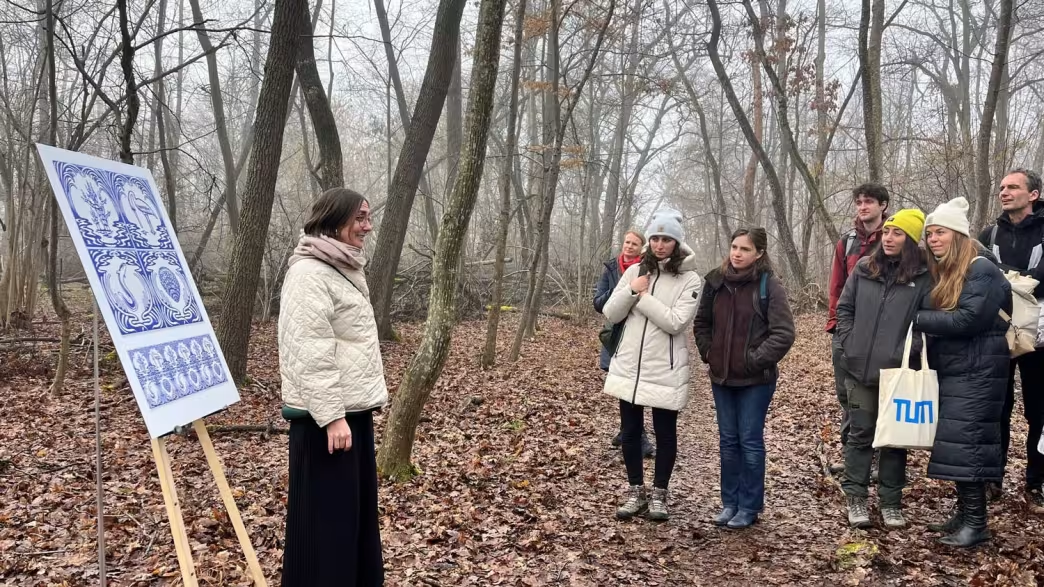
First ‘Rewilding through Art’ forest exhibition in Freising, Germany.
Photo by:
Evgenia Emets
The self-guided physical exhibition continues to travel across Europe and was recently hosted in Romania at the Natural Park Vânători-Neamț from 13 - 20 August 2026. The artworks were being set in a way to provide a story of rewilding through 6 themes (e.g. complexity of nature, our responsibility, co-creating with nature and others). To continue the conversation around cultural and artistic responses to rewilding, the artworks will continue to travel to other European countries in 2027, including Belgium and Czech Republic.
Forest Storytelling and Engagement for Change
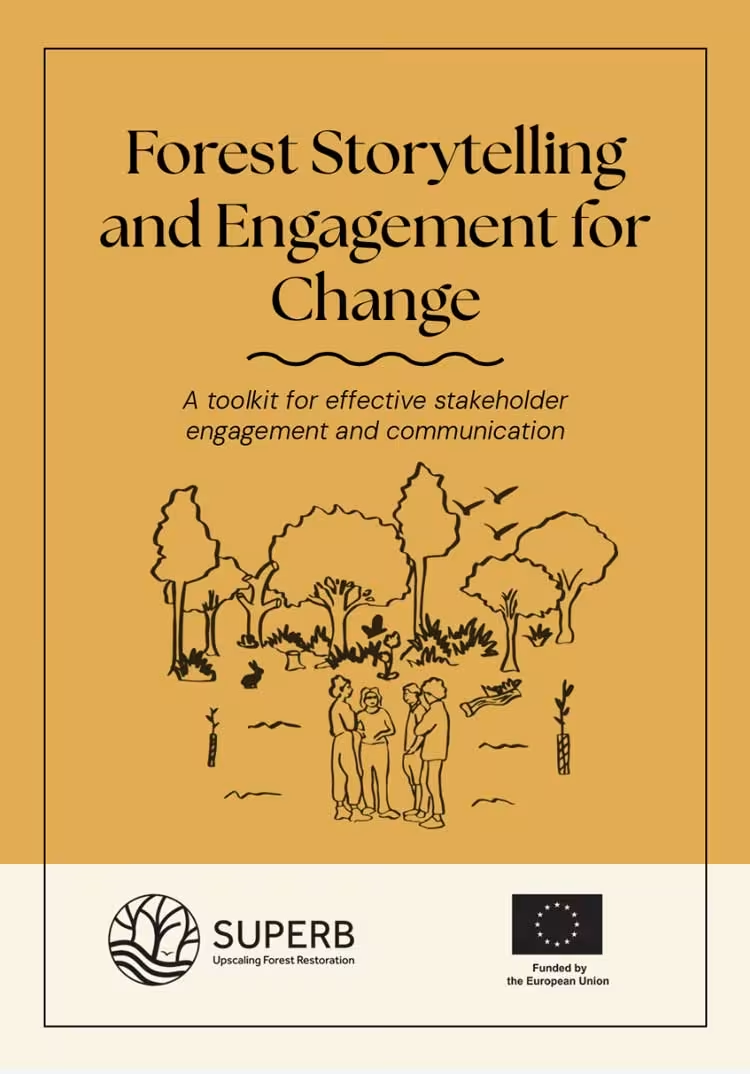
The ‘Forest Storytelling and Engagement for Change’ toolkit, co-authored by EFI, King’s College London and Prospex Institute under the EU-funded SUPERB project, equally showcases the importance of culture-based climate action. It demonstrates through practical examples that forest restoration depends on more than just scientific evidence or technical interventions. It is also shaped by the meanings, values, memories, and relationships people hold toward forests. As such, the toolkit positions storytelling as a way to make restoration work more relatable and help practitioners imagine, and act, toward more relational forest futures.
In short, the toolkit helps translate the cultural dimension of restoration into actionable insight: Mapping whose voices and stories are missing; co-creating narratives through workshops, walks, visual media and listening; engaging under-represented groups; and using dialogue to address conflict. In doing so, it shows how cultural practices can build empathy, participation, shared responsibility, and the collective capacity needed for long-lasting climate action and restoration impact.
Place-based Histories and Heritage: Forests as Important Cultural Artifacts
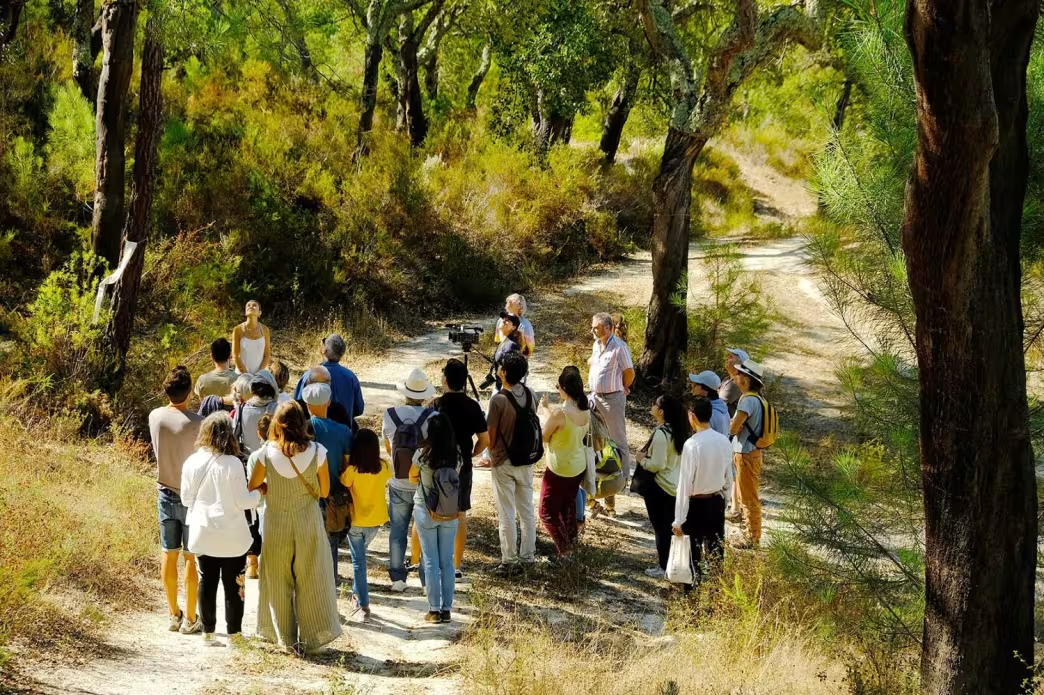
Photo by:
Eternal Forest
During the Scientific Seminar at EFI’s 2024 Annual Conference, we invited artist and cultural practitioner Evgenia Emets from Eternal Forest to talk about the role of immersive and experiential methods and learning experiences for bringing people and forests closer together. We explored the notion of “forest sanctuaries” as cultural places for multidisciplinary knowledge exchange and integrative ecological learning, as well as brought attention to the transformative potential of “Forest Art” in connecting and engaging wider audiences around forest-related issues.
We also asked: “What if we understand forests as important cultural artefacts? Holding place-based histories, heritage and cultural significance? How would this shift the ways in which we collectively value and care for forests?”
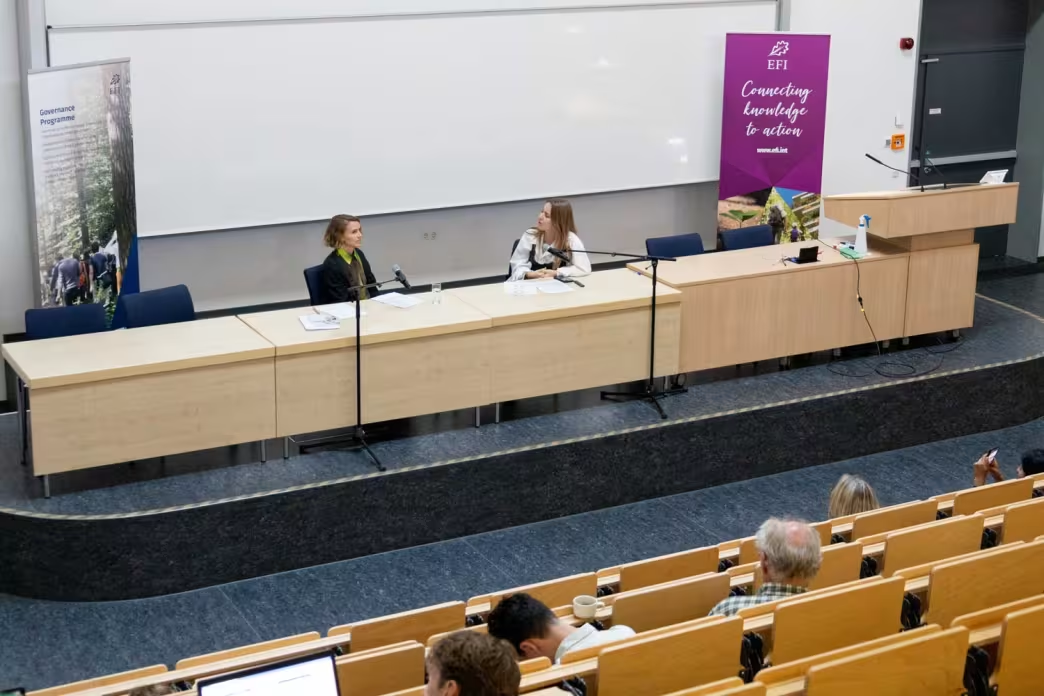
Conversation at EFI Scientific Seminar between Evgenia Emets and Rahel Könen.
Photo by:
Rosa Castañeda
These impulses not only hint towards the intricate link between culture and nature but also re-opens the question of why culture-based climate action may matter for co-creating thriving forest futures.
Practice and Policy Recommendations for involving Artists in Woodland Creation
To engage with this question, the NewLeaves Network published a new report on why cultural and artistic practices matter in the context of reforestation and afforestation. Through four concrete case-study projects involving artistic and forestry-related researchers and practitioners, Culture for Climate Scotland notes that such collaborative projects can support in:
- Increasing tree cover.
- Creating deeper connections with nature and highlighting the multiple values of nature.
- Addressing inequity issues through involving groups often excluded from engagement with land management.
- Strengthening community engagement, stewardship and valuing of trees and forests beyond recreation and productivity.
- Creatively framing afforestation and reforestation through stories and metaphors to enhance their meaning and value, as well as designing and co-creating planting schemes.
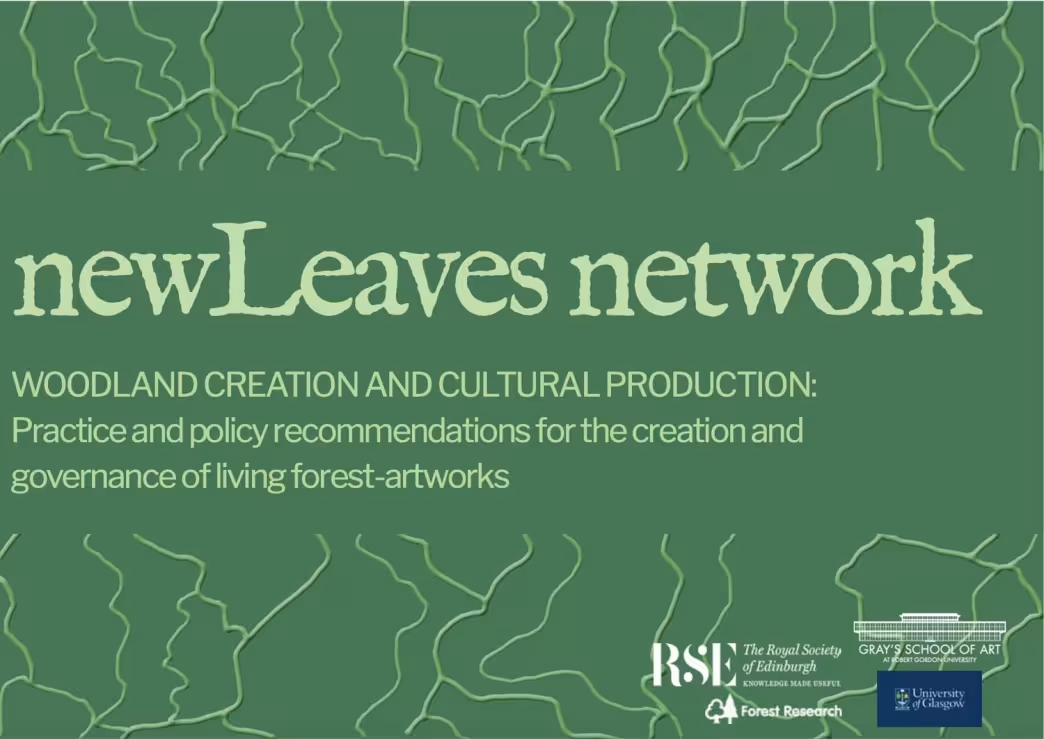
Cover of the NewLeaves Network Practice and Policy Recommendations
Based on the idea that artists hold diverse and meaningful skills to actively contribute with value and design to the ongoing life of forests, the NewLeaves Network, funded by the Royal Society of Edinburgh, has produced publicly available practice and policy recommendations for involving artists in woodland creation. These recommendations have been written to support funders, forest and land managers, communities, and artists in developing new, engaging, and living forest artworks.
As such, they hold significance for global climate and biodiversity targets and will be even more relevant in the context of the forthcoming UN Decade of Afforestation and Reforestation.
But beyond forest ecosystems, how can we further support culture-based climate action?
Where Culture meets Climate at Global Scale
Global initiatives, such as the Entertainment + Culture Pavilion, stand at the intersection of culture and climate action, dedicated to utilizing the transformative power of arts, entertainment, and cultural engagement to address global climate challenges.
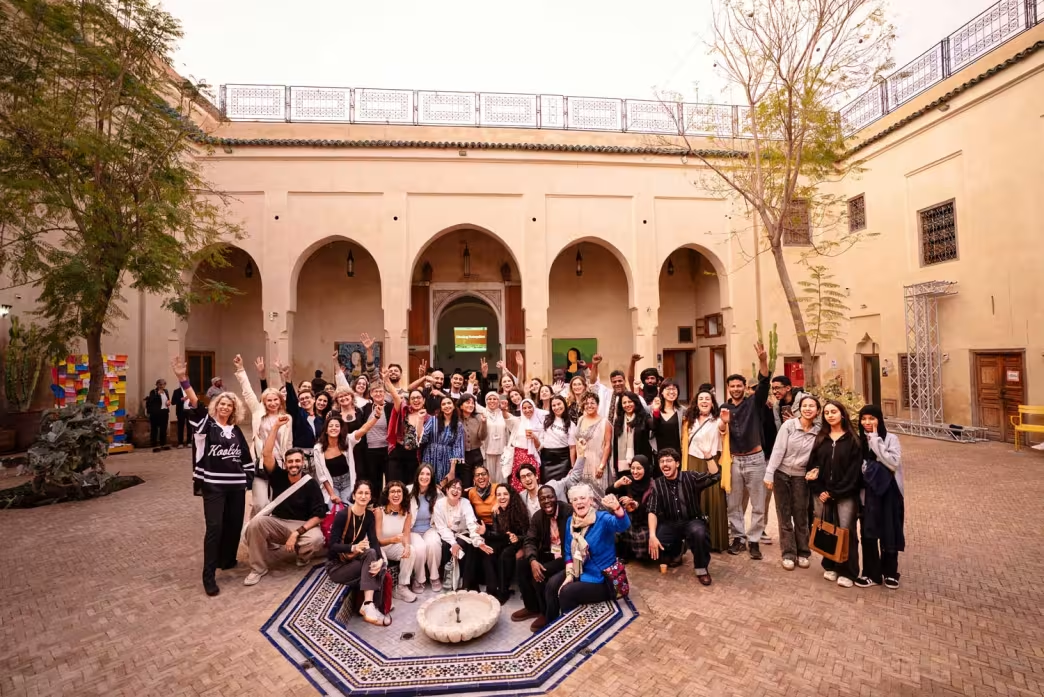
E+C Pavilion’s Marrakech Accelerator in March 2026.
Photo by:
Farhath Siddiqui
Launched at COP28 and founded on the belief that culture drives meaningful change, E + C Pavilion is a hub for creativity, community-organizing and innovation. They curate dynamic events, forge strategic partnerships, and spotlight innovative cultural practices that aim to shape environmental policies.
“We know that cultural heritage and storytelling can transform the way we respond to the climate crisis...yet they are often overlooked. As a non-profit initiative, we organize immersive spaces worldwide where art, music, and storytelling come alive to fuel intergenerational dialogue and build a culture rooted in climate justice.”
First-ever Culture Global Stocktake for Climate Action (CGST)
An important milestone has been the launch of the first-ever ‘Culture Global Stocktake for Climate Action’ – a policy tool designed to do one thing: embed culture into climate decision-making. 50+ cultural practitioners, Indigenous leaders, creatives, researchers and policymakers came together through the Marrakech Partnership Accelerator to co-create the first draft of such a consensus-based policy document. Here the aim was to assess impacts, gaps, opportunities, and concrete pathways for integrating culture into UNFCCC processes﹣including future Global Stocktakes.
The Culture Global Stocktake for Climate Action, spearheaded by the Entertainment + Culture Pavilion, is hence a global, participatory process to assess how culture is already contributing to climate action﹣and how it could do much more. They write, “culture is still largely absent from climate policy frameworks, despite shaping values, behaviors, narratives, and systems of care”.
The Culture Global Stocktake responds to this by asking:
- Where is culture already accelerating climate action?
- Where is it being overlooked, underfunded, or excluded?
- What evidence, policies, and frameworks are needed to embed culture into climate mitigation, adaptation, and equity?
For now, the E + C Pavilion’s impact report from COP30 highlights how culture-based climate action already makes a difference and the multiple ways institutions, creatives, researchers and other cultural practitioners can get involved in such efforts.
What's in the Pipeline regarding Culture-based Climate Action and Forests?
Going forward, EFI has more projects in the pipeline which will aim at integrating artistic and cultural practices, as well as local perspectives, into scientific work and research on forest-related issues. A new Open Call surrounding forest management and its role in stewarding more biodiverse forest ecosystems may launch in early 2027 under the EU Horizon TRANSFORMIT project. Other than that, EFI will be involved in a new project called BorealSoil, starting in January 2027 and integrating 4 Living Labs focused on boreal forest and agroforestry soils. Here, an art initiative involving cultural practitioners is conceptualized as part of the project's diverse work packages.
-----------------------------
Learn more about the NewLeaves Network’s recommendations via Culture for Climate Scotland’s Case Study: Exploring the role of artists in afforestation and reforestation.
Learn more about the Entertainment + Culture Pavilion and stay updated with their work at the intersection of culture and climate.
Learn more about the ‘Rewilding through Art’ Open Call via https://wildcard-project.eu/rewilding-through-art-virtual-exhibition-gallery-launched/ and https://www.meandermagazine.earth/rewildingthroughart
Learn more about the ‘Forest Storytelling and Engagement for Change’ toolkit.
Learn more about Eternal Forest and “Forest Art”.
Learn more about culture-based climate action via UNESCO’s 2025 thematic paper: “Culture and climate action: From margins to mainstream”.
Related content
The forest that refused the rulebook
Journalists, scientists and forest experts explore how different perspectives shape decisions on forest health and post-disturbance management in…
- Forests and people
What takes a new landowner from inaction to stewardship?
Inherited land often goes unmanaged, spreading fire risk to whole communities; economic incentives can turn inaction into stewardship.
- Forests and people
De mémoire d’arbre: five centuries through the eyes of a tree
To celebrate World Book Day, Magda Bou Dagher Kharrat, Principal Scientist at EFIMED, recommends one of her recent favourite reads.
- Forests and people