What is closer-to-nature forestry?
The term “closer-to-nature forestry” was first introduced in the EU Biodiversity Strategy, but only after the EU Forest Strategy, with its first attempt of a definition, related guidelines were developed. Under the umbrella of sustainable forest management, closer-to-nature forestry promotes the diversity of forest components, structures and processes characteristic of natural forests and cultural woodlands at different scales to increase biodiversity and safeguard ecosystem functioning and resilience.
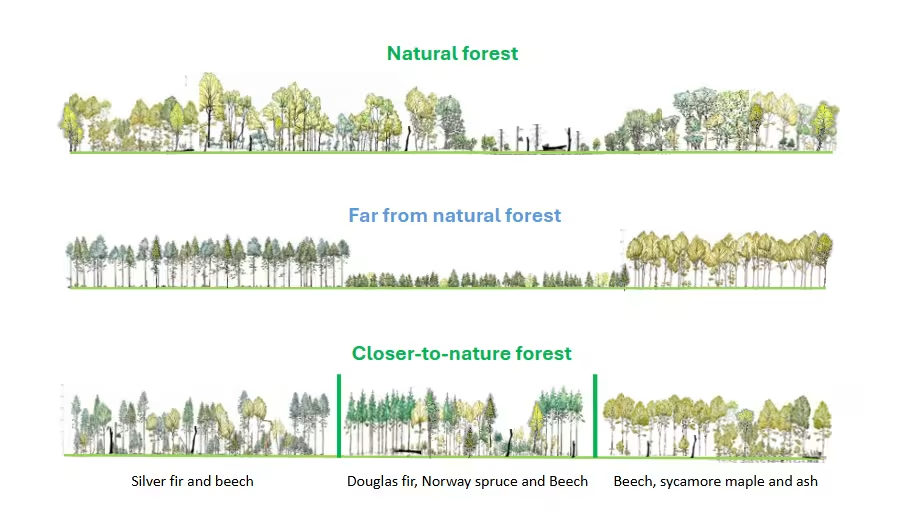
Photo by:
Larsen 2012, in Larsen et al. 2022
Managers are encouraged to promote natural tree regeneration, ensure respectful harvest conditions and minimise other management interventions, preserve and restore forest soils and water ecosystems, optimise deadwood retention, set areas aside, protect specific species on-site, manage ungulate species at natural carrying capacity and take a scale-specific approach. Implementing closer-to-nature forestry requires detailed planning and a long-term vision but also continuous monitoring to adapt to a changing environment.
Essentially, closer-to-nature forestry does not propose any fundamentally new concept but encompasses existing silvicultural approaches to increase biodiversity in managed forests.
Further reading
Larsen et al. 2022. Closer-to-Nature Forest Management. From Science to Policy 12. European Forest Institute. https://doi.org/10.36333/fs12
European Commission, Directorate-General for Environment. 2023. Guidelines on closer-to-nature forest management. https://data.europa.eu/doi/10.2779/731018

Related content
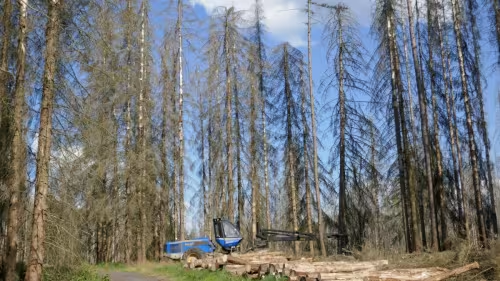
How bark beetles became a forest crisis?
Bark beetle outbreaks have become a powerful symbol of forest crisis and a visible sign of climate change reshaping Europe’s forests.
- Resilient forests
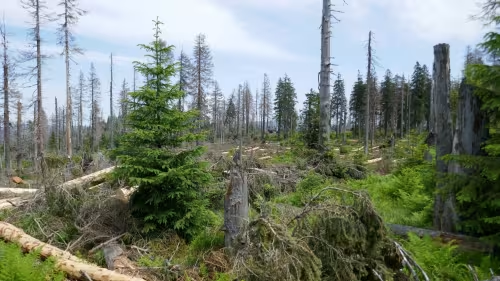
How to live with bark beetles in a warming climate?
Bark beetle outbreaks expose tensions between conservation, forest resilience, timber production and economic interests.
- Resilient forests
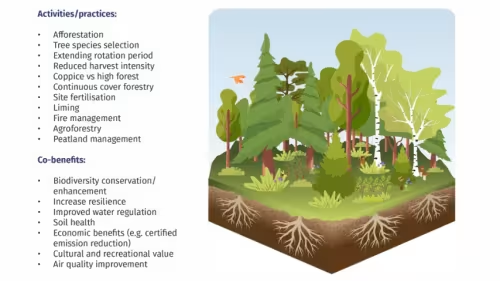
What is carbon farming in forests?
Explore carbon farming activities, practices and co-benefits
- Resilient forests