Photo by:
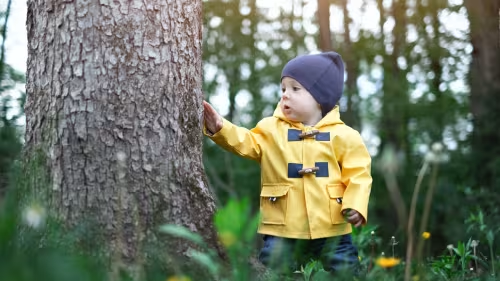
Photo by Halfpoint / AdobeStock
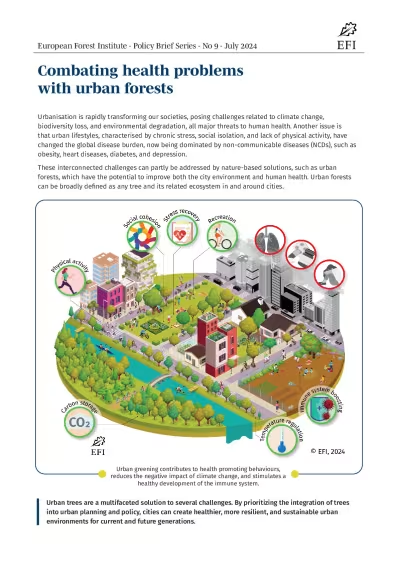
Urbanisation is rapidly transforming our societies, posing challenges related to climate change, biodiversity loss, and environmental degradation, all major threats to human health. Another issue is that urban lifestyles, characterised by chronic stress, social isolation, and lack of physical activity, have changed the global disease burden, now being dominated by non-communicable diseases (NCDs), such as obesity, heart diseases, diabetes, and depression.
These interconnected challenges can partly be addressed by nature-based solutions, such as urban forests, which have the potential to improve both the city environment and human health. Urban forests can be broadly defined as any tree and its related ecosystem in and around cities.
Urban trees are a multifaceted solution to several challenges. By prioritizing the integration of trees into urban planning and policy, cities can create healthier, more resilient, and sustainable urban environments for current and future generations.
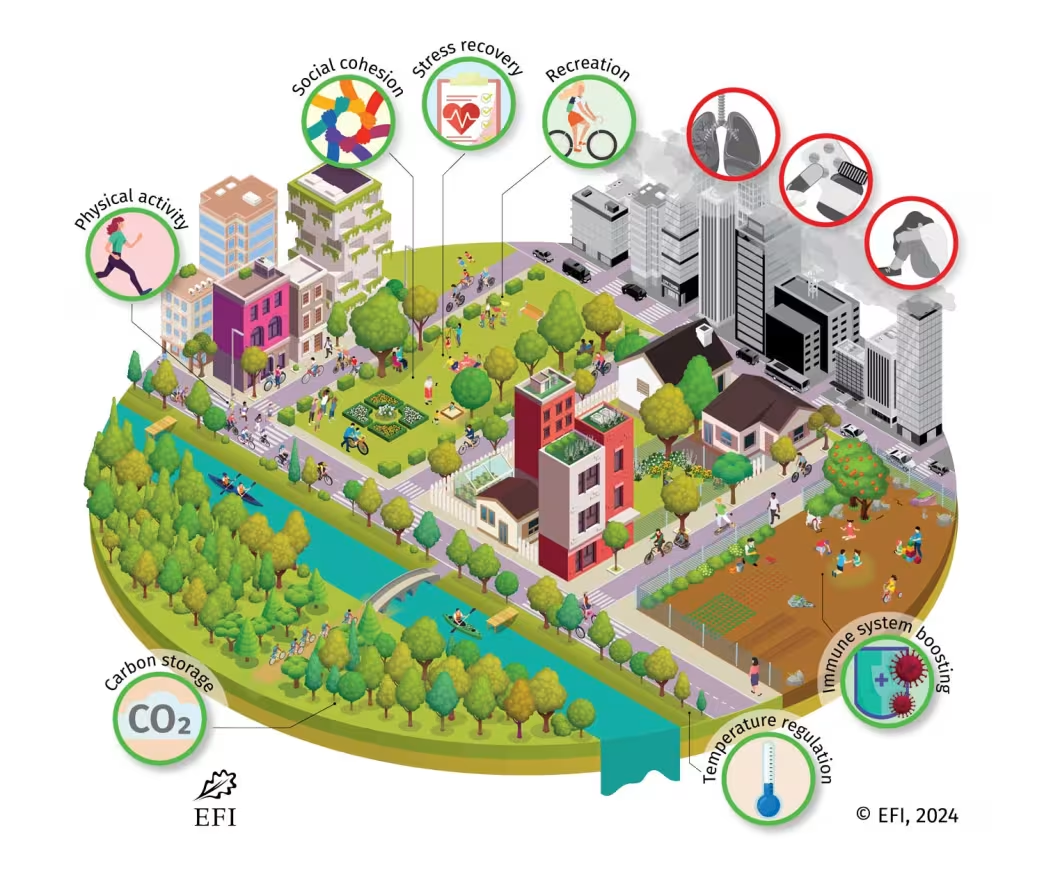
Urban greening contributes to health promoting behaviours, reduces the negative impact of climate change, and stimulates a healthy development of the immune system.
Urban forests promote public health and well-being
A vast amount of research studies demonstrates that living in urban green neighbourhoods promotes physical activity and social interactions between people with profound benefits for public health. The promotion of healthy behaviours significantly reduces the number of NCDs and makes people live longer and healthier lives. In addition, experimental studies prove nature’s stress-reducing impacts and the prevention of depression and other mental disorders. Importantly, urban forests may buffer socioeconomically related health inequalities, contributing to longer lives for everyone if the greenery is planned and managed correctly.
Urban forests contribute to recreational needs and address climate change
Urban forests respond to citizens’ recreational demands while also mitigating part of large cities’ carbon debt. An important climate adaptation impact is the cooling of urban temperatures, which directly prevents heat-related illnesses in cities and saves tens of thousands of lives each year.
Biodiverse environments lead to improved immune function
Urban forests contribute to biodiversity by providing habitats for diverse plant and animal species. By enhancing urban forests and maintaining tree cover, cities can protect biodiversity and support ecosystem services essential for human wellbeing. As a direct health co-benefit, contact with biodiverse environments improves children’s immune systems, potentially reducing the prevalence of a number of “modern” illnesses, such as allergies and asthma.
What can policymakers do?
- Integrate trees into urban planning: incorporate urban tree planting and maintenance programmes into development plans and zoning regulations to ensure the preservation and expansion of tree canopy cover with benefits for biodiversity and urban citizens now and in the future.
- Conduct health impact assessments: quantify health benefits and evaluate healthcare savings from green infrastructure and urban forest restoration projects to justify investments in tree protection and tree planting initiatives, particularly in less privileged areas.
- Educate and engage communities: raise awareness about the long-term health benefits of urban trees through educational campaigns and community engagement initiatives.
- Collaborate across sectors: foster partnerships between different government agencies, non-profit organizations, community groups, and private stakeholders to coordinate efforts and leverage resources for urban tree planting and maintenance projects as a part of public health actions and efforts.
Reference
van den Bosch, M. Combating health problems with urban forests? Policy Brief 9. European Forest Institute. https://doi.org/10.36333/pb9

Related content
Combattere problemi di salute con le foreste urbane
Perché i progetti di piantumazione e manutenzione degli alberi urbani dovrebbero essere inclusi come parte delle azioni e degli interventi di sanità…
- Forests and people
How to govern Europe’s forests for multiple Forest Ecosystem Services?
This Policy Brief sets out four policy pathways which can support our forests to provide the goods and services society demands.
- Forests and people
How can forests improve human health and wellbeing?
Read about the diverse effects of forests on our health and well-being.
- Forests and people