How does women’s economic empowerment strengthen sustainable and inclusive forest value chains?
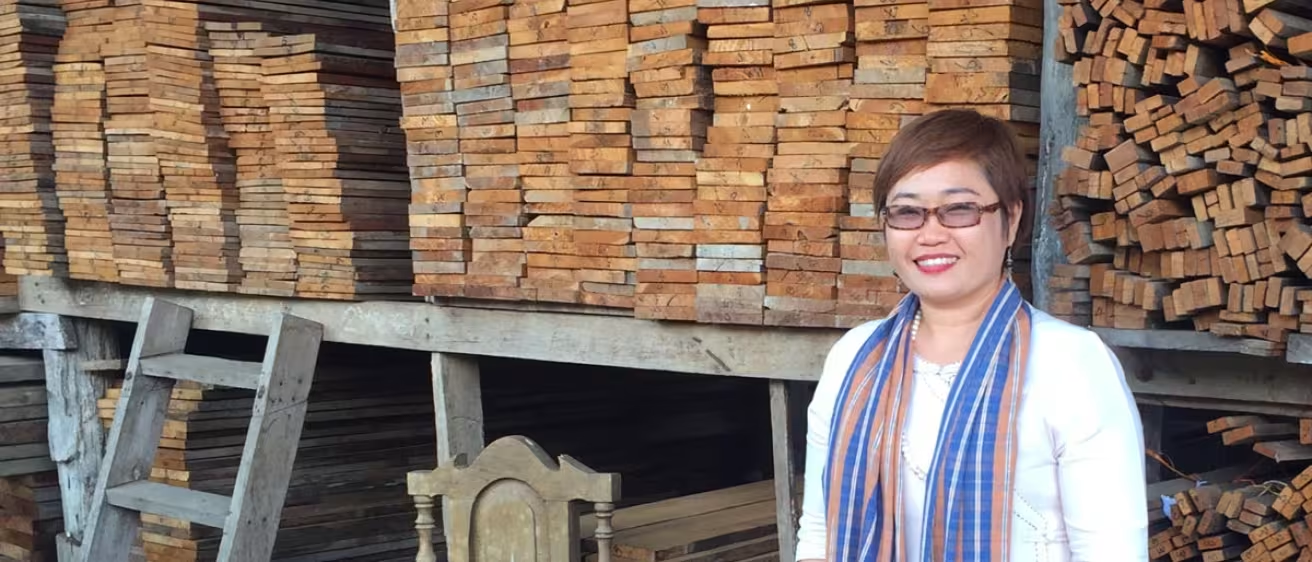
Photo by:
EFI
Why women’s empowerment matters
Across the world, women play vital roles in micro and small forest enterprises (MSMEs), particularly in wood processing and informal forest product value chains. Forests and forest-based economies are more resilient, inclusive, and sustainable when women are empowered. Yet their contributions often go unrecognized and under-supported.
Empowering women in forest MSMEs is not only fair, it is strategic. When women access decent work, training, and decision-making roles, enterprises and communities are more likely to invest in long-term forest stewardship, efficient use of resources, and improved social well-being.
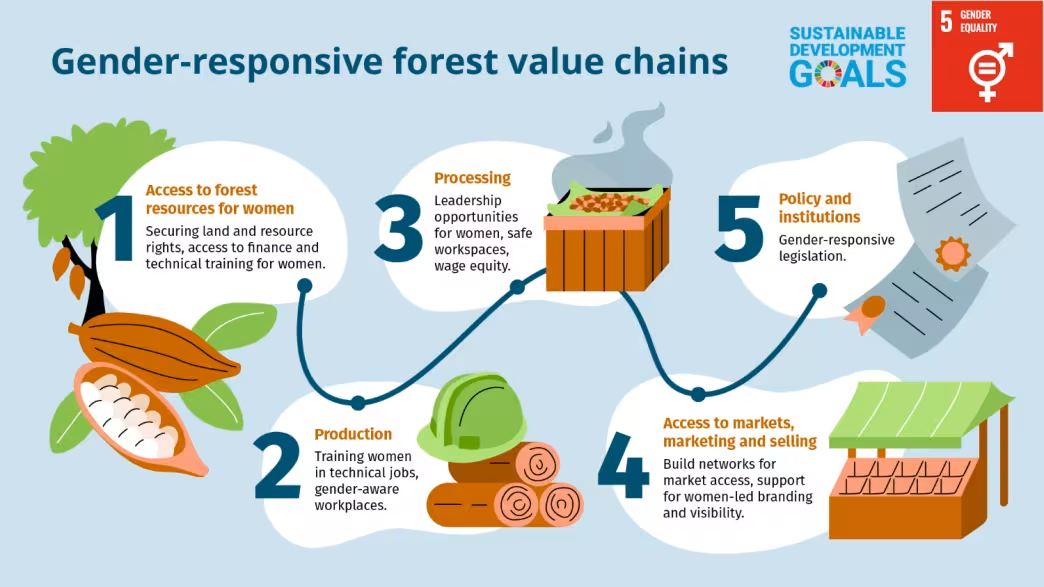
Yet systemic barriers (from legal restrictions to gender norms) continue to limit women’s access to land, finance, training, and leadership roles. These obstacles are especially acute in rural areas and small enterprises. Removing them is essential to ensure forest-based value chains contribute to both sustainability and equity.
Evidence from Southeast Asia, Latin America, and Africa shows that women’s economic empowerment (WEE) contributes to stronger household incomes, better health and education outcomes, and more inclusive forest governance.
What works to empower women in forest MSMEs
While strategies must reflect local contexts, Southeast Asian field experience points to three effective interventions:
1. Capacity building through gender integrated training and mentoring
Incorporating gender considerations into business and technical training (e.g. wood processing, furniture management, product marketing) challenges stereotypes and improves women’s skills. Targeted coaching or mentoring strengthens confidence, leadership, and enterprise development. Effectiveness depends on context. Mixed gender training suits fast-paced business settings, while gender-only sessions work where community support is stronger. Personalised mentoring has boosted women’s skills in bookkeeping, product development, and regulatory compliance. Across contexts, continuity and trust building are key for lasting change.
2. Enhancing public engagement and policy dialogue
Raising women’s visibility in forest MSMEs shifts public perceptions and strengthens their status in enterprises and communities. Public campaigns, media, and event participation boost their confidence and influence. Impact grows when paired with multi-stakeholder engagement: cross sector workshops link gender equality commitments to practical support and raise
institutional awareness over time.
3. Promoting inclusive forest value chains
Supporting value chains that reflect women’s roles and constraints expands opportunities for entrepreneurship and leadership. Reclaimed or upcycled wood chains, for example, need less capital, offer flexible work, and have proven especially accessible to women. With training, legal recognition, and market access, women-led enterprises can gain stronger roles in production and industry networks promoting both women’s economic participation and sustainable resource use.
What should policymakers do?
- Integrate gender-transformative approaches into vocational training strategies for women and men.
- Support women-led businesses by promoting inclusive value chains.
- Reform regulations and business support services to improve women’s access to training, finance, and legal recognition.
- Ensure that gender considerations are embedded into forest legality, traceability, and due diligence systems, including through gender impact assessments.
- Improve gender data collection and foster multi-stakeholder dialogue that includes women’s voices and leadership.
Citation
Colonna, T., Arpornsilp, R., Leal Riesco, I. 2025. How does women’s economic empowerment strengthen sustainable and inclusive forest value chains? Policy Brief 15. European Forest Institute. doi: 10.36333/pb15
-
Ratchada Arpornsilp

Related content
Comment l'autonomisation économique des femmes renforce-t-elle les chaînes de valeur forestières, durables et inclusives ?
L’accès des femmes aux ressources, à la formation et aux marchés dans les TPME forestières favorise des chaînes de valeur durables et inclusives.
- Forests and people
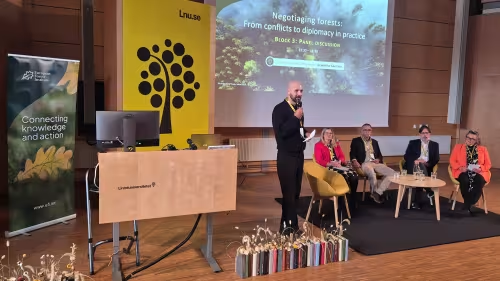
EFI Scientific Seminar 2026: Forest Frontlines: From Conflicts to Diplomacy
The seminar moved from understanding of forest conflicts to exploring tools and mindsets for conflict transformation and forest diplomacy.
- Inclusive governance
Overview of some commonly used mobile apps for collecting geolocation information
An overview of key features, accessibility and usability of six commonly used free tools for collecting plot-level geolocation information.
- Forests and people