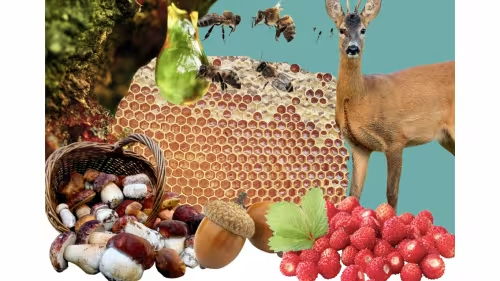
Ecosystem services refer to the benefits humans derive over time from natural or near-natural systems and processes. The four subcategories are:
- Regulating services (e.g. watershed protection, pollution control)
- Supporting services (e.g. nutrient cycling)
- Cultural services (e.g. recreation, tourism)
- Provisioning services (e.g. food, fuel)
The concept has been around since the 1970s but was strongly popularized through the Millennium Ecosystem Assessment in 2005. It is anthropocentric, in the sense of excluding benefits provided to other living beings, unless those values are also explicitly shared by humans. Yet, in this sense it also forces us to justify, and sometimes quantify what benefits from nature humankind derives.
Some controversies also surround the concept. The so-called “provisioning services” are essentially hands-on tangible products (e.g. wood), which are usually sold in markets for consumption. In turn, services are defined as intangibles, often non-marketed, sometimes of public nature (non-excludable) and indivisible. Thus, genuine services also need to be managed distinctly from products.
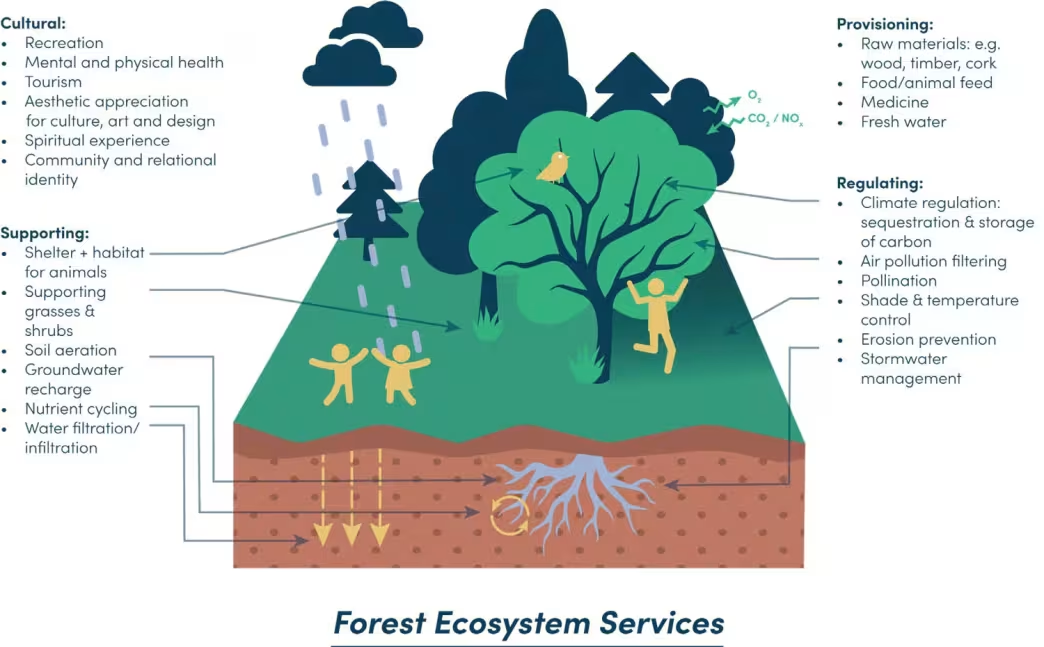
Graph originally developed for resonateforest.org
Further reading
Millennium Ecosystem Assessment (2005). Ecosystems and human well-being : synthesis. Washington, DC: Island Press. https://www.millenniumassessment.org/documents/document.356.aspx.pdf

Related content
What do people think about forests in the EU?
FInd out people's perceptions of different forest ecosystem services in the EU.
- Forests and people

How to generate income from forests?
Wood still funds most European forestry, but diverse ecosystem services need stronger financial support through policy, markets and incentives.
- Forests and people
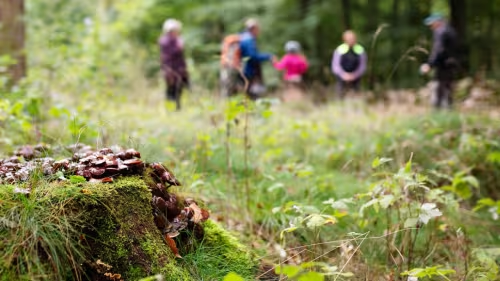
What are non-wood forest products?
Non-wood forest products include berries, mushrooms, medicinal and decorative plants, nuts, resins, game, and wild honey.
- Forests and people