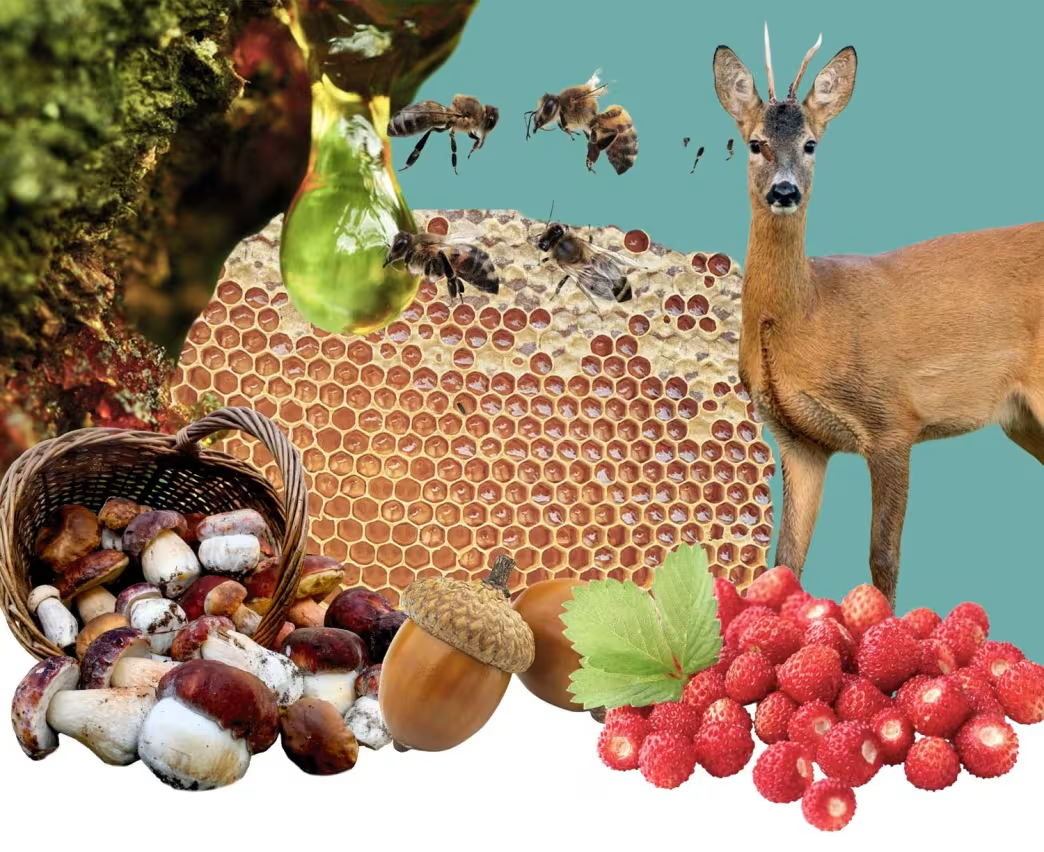
Non-wood forest products (NWFPs) include berries, mushrooms, aromatic, medicinal, and decorative plant materials, nuts, saps, and resins, as well as game and wild honey. What is considered a non-wood forest product varies by region, as does its use.
NWFPs can be wild collected (e.g., mushrooms) or managed for industrial uses (e.g., cork, resin). Fully domesticated ones, such as chestnuts, pinenuts or truffles, sometimes coexist with their wild counterparts. This can make it difficult for consumers to distinguish between wild and farmed products.
NWFPs often complement family income, contribute to food security and nutrition, and are an important medicinal remedy source. NWFPs are also part of cultural heritage and spiritual life. They thrive in highly biodiverse habitats like Montado or Dehesa forests and are part of traditional recipes and crafts. They attract hobbyists and professionals, promoting a better connection with nature and healthier lifestyles.
NWFPs also contribute to bioeconomy value chains and nature-based tourism. The availability and conservation of wild and semiwild NWFPs are challenged by climate change. Ensuring sustainable harvesting and protecting local communities’ rights are crucial for their preservation and equitable use.
Further reading
Martínez de Arano et al. 2021. Non-wood forest products for people, nature and the green economy. Recommendations for policy priorities in Europe. A white paper based on lessons learned from around the Mediterranean. Knowledge to Action 5, European Forest Institute. https://doi.org/10.36333/k2a05

Related content
What do people think about forests in the EU?
FInd out people's perceptions of different forest ecosystem services in the EU.
- Forests and people

How to generate income from forests?
Wood still funds most European forestry, but diverse ecosystem services need stronger financial support through policy, markets and incentives.
- Forests and people
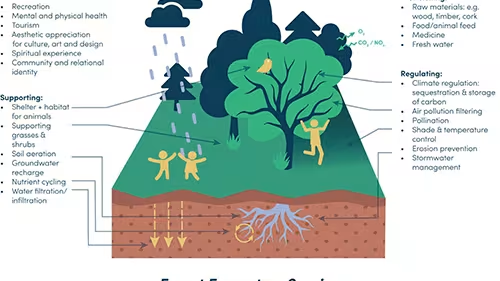
What are ecosystem services?
Ecosystem services refer to the benefits humans derive over time from natural or near-natural systems and processes.
- Forests and people