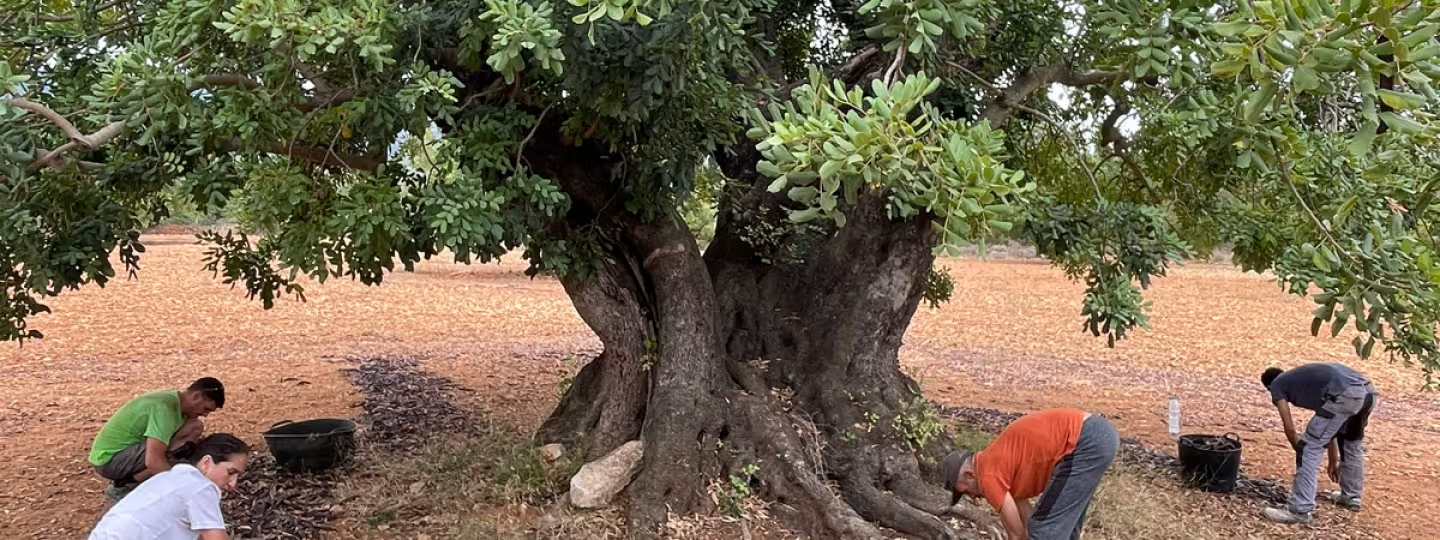
The carob’s long shadow: from cursed tree to climate hero
Today, the carob tree (Ceratonia siliqua) enjoys something of a renaissance, celebrated for its resilience, nutritional value and potential as a climate-adapted crop across the Mediterranean basin. Yet not so long ago, in villages stretching from the Levant to the Iberian Peninsula, carob carried a far darker reputation. Its rehabilitation is one of the more remarkable reversals in how a species can be perceived, and what that shift reveals about Mediterranean cultures is perhaps as interesting as the tree itself.
Saturn’s tree: a cosmos of bad omens
To understand why the carob was feared, it helps to know how pre-modern Mediterranean and Levantine societies understood the natural world. In the astrological cosmology that descended from ancient Babylon and Greece, passed through medieval Islamic scholarship, and filtered into popular belief across the Mediterranean, every plant, animal and landscape carried a planetary signature. The seven classical planets each governed a domain of nature and human experience, and their influence was felt not just in the sky but in the soil beneath one’s feet.
Saturn, known in Arabic as Zuhal (زُحَل), held the most ominous portfolio. It was the planet of darkness, coldness and dryness. Of slow time and hard labour. Of melancholy, misfortune and barren land. Things that endured without bringing joy were Saturnine. Landscapes that were rocky, arid and neglected were Saturn’s terrain. Creatures and plants associated with hardship, with the margins of human life, with survival rather than flourishing, belonged to Saturn.
The carob, in this framework, was Saturn’s tree. It grew on dry, thin-soiled hillsides that no one else wanted. It lived for centuries but offered shade without comfort. It fed people in desperate years and animals in ordinary ones. Every quality that made it useful in extremity also confirmed, in the folk imagination, its Saturnine nature. In Arabic astrological tradition, Saturn was considered the most malevolent of the classical planets, so to be Saturn’s tree was a heavy designation to carry.
A tree of ill omen: Levantine folklore
Against that backdrop, a passage from Traditions, Beliefs and Folk Crafts in Palestine before 1948 (Dr F. Sahab, 1993) reads less like superstition and more like a coherent cultural logic. “Not all trees are blessed,” it states; some are inhabited by demons, and farmers do not hang their clothes on them. The carob was firmly among the suspect. Evil spirits were said to favour it over other trees; a farmer would not tether a donkey beneath its branches without first seeking permission from the jinn. Sleeping under a carob was not merely uncomfortable, it was genuinely feared. The passage closes by anchoring these beliefs in the cosmos: the bad omen of the carob, it states, stems from the fact that it is the tree of the planet Saturn, Zuhal.
The linguistic dimension reinforced the spiritual one. In folk belief, the Arabic kharrūb was linked etymologically to kharab, meaning destruction or ruin, lending the tree a lexically embedded sense of menace even before any spirit entered the picture.
Beyond the spirit world, the carob was associated across Levantine oral tradition with abandoned and marginal landscapes: rocky, dry hillsides where little else survived. Its presence became a cultural marker of desolation rather than fertility. It was the tree found on land left uncultivated. Loneliness clung to it. Its pods fed people in hard years during droughts, famines and wars, meaning that eating carob, in living memory across Palestine, Lebanon and Syria, signalled that things had gone badly wrong.
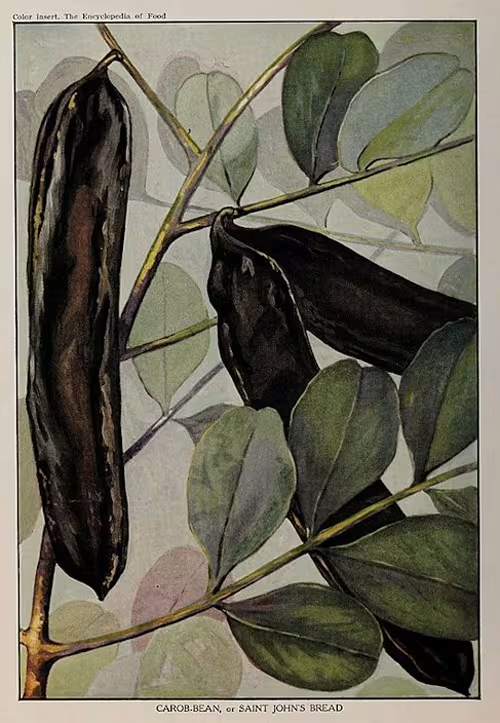
Figure 1. Carob beans or Saint John’s bread, The Encyclopedia of Food by Artemas Ward, 1923.
From civil war survival food to superfood
The Spanish case is perhaps the most dramatic transformation. During and after the Civil War, and through the long years of post-war scarcity, carob became indelibly associated with hunger. It was animal feed, given to mules rather than served at the table. Older generations across rural Andalusia, Valencia and Catalonia remember it as something eaten only when nothing else remained. The shame attached to that memory was real and lasting. For many families, carob represented not heritage, but hardship.
Today, Spain is one of the most dynamic centres of carob innovation globally. Gourmet carob chocolate, carob flour for coeliac markets, carob-based cosmetics and climate-smart agroforestry systems have transformed what was once a symbol of deprivation into a premium Mediterranean product. The distance between “food eaten only when there was no choice” and “artisanal superfood” is, in the Spanish case, barely two generations.
Black gold with a heavy price
In Cyprus, carob acquired the evocative nickname “black gold”, though the term carried a double meaning. Economically, the island’s carob exports were significant throughout the nineteenth and early twentieth centuries, making it an important agricultural commodity. Yet socially, carob labour was associated with harsh dryland work and economic necessity, reflecting a rural life many were eager to leave behind as urban opportunities expanded. The value of exports did not translate into social prestige for producers.
Today, carob festivals and heritage initiatives are helping to reclaim the tree as a source of cultural pride, and to a considerable extent, they are succeeding. The “black gold” is being revalued, this time on the community’s own terms.
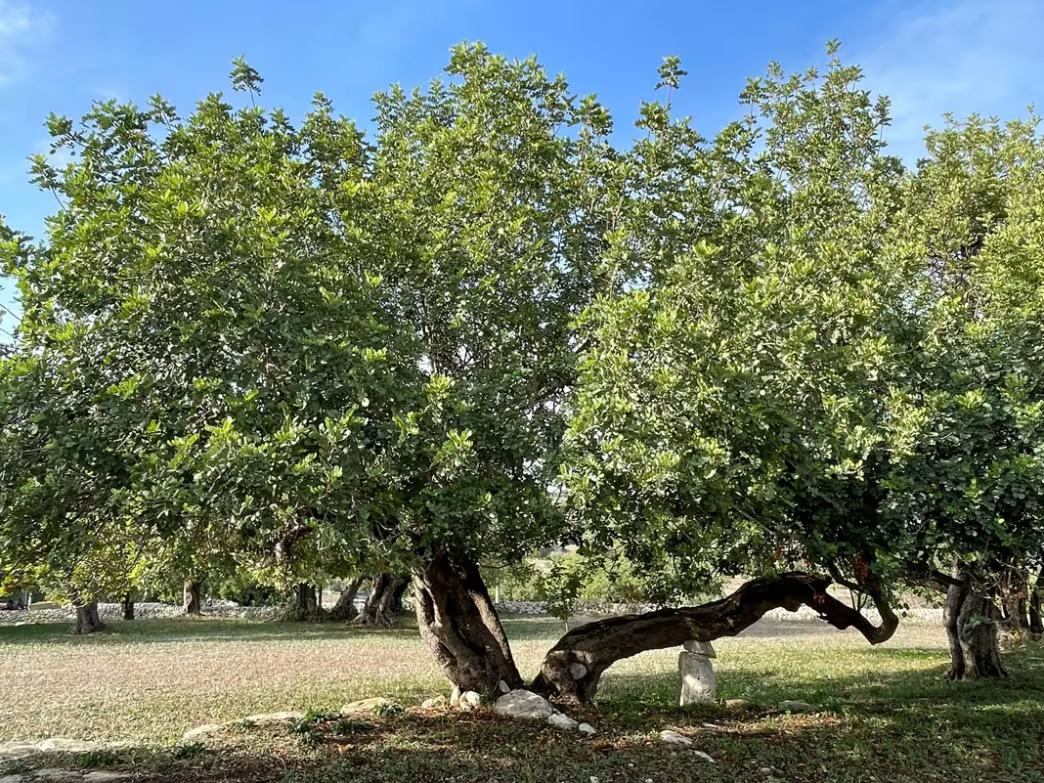
A carob tree in Valencia, Spain.
Photo by:
Magda Bou Dagher Kharrat, EFI
Famine memory and reinvention
In Greece, carob flour and bread were used as famine substitutes during the Axis occupation and subsequent economic crises of the mid-twentieth century. Like many survival foods, carob carried a lasting social stigma because it evoked memories of hunger and hardship. It took decades, and a generation without direct experience of those years, for Greek gastronomy to reintroduce carob as a heritage ingredient in syrups, health products and artisanal cuisine.
Southern Italy and Sicily tell a similar story. Carob was long considered a peasant crop suited to poor soils, overshadowed by olives and citrus, and associated with rural backwardness. Today, Sicilian carob is undergoing a revival, with sustainable agroforestry and heritage branding giving it a new identity. Landscapes once seen as marginal are now presented as authentic Mediterranean terroir.
The fallback tree finds new roles
In Morocco and across North Africa, carob persisted in marginal, arid environments as a reliable but undervalued crop. Compared with olives, dates or cereals, it was often seen as a fallback: useful in difficult years, but not a source of pride. This perception is shifting. Carob is increasingly integrated into ecological restoration programmes, women-led cooperatives and drought adaptation strategies, reframed as a model species for resilient dryland systems.
Saturn’s tree, reconsidered
What unites these stories, from the jinn-haunted hillsides of the Levant to famine-era Greece, is that the carob’s stigma was never solely about the tree itself. It reflected what the tree witnessed: poverty, hunger, abandoned land and hard labour. The carob was present in the worst moments, and those experiences were projected onto it.
Its rehabilitation is therefore more than an agricultural trend. It represents a renegotiation of memory, a collective shift in how Mediterranean societies interpret endurance and resilience. The qualities that once marked it as a crop of desperation, deep roots, drought tolerance and patience, are precisely those now needed in a warming Mediterranean.
Saturn’s tree, it turns out, had been right all along. We simply needed time to understand it.
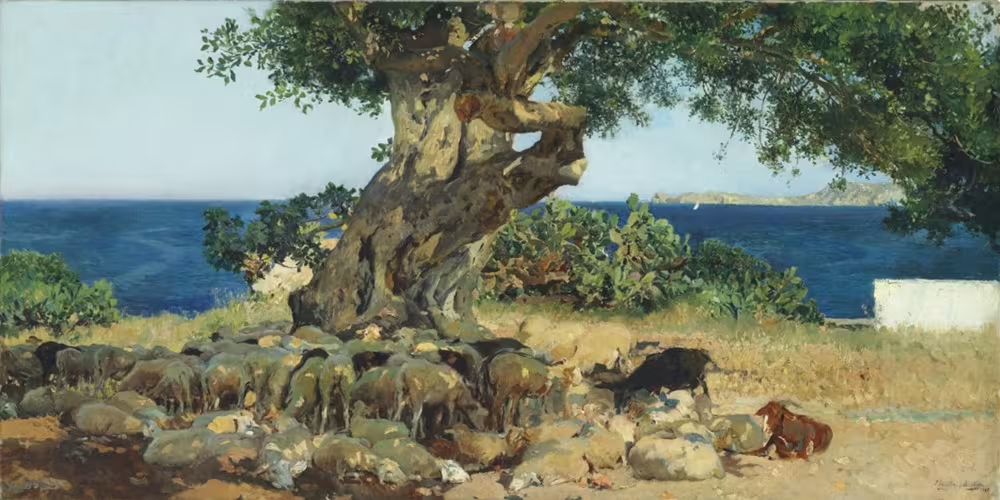
Figure 2. Painting by Joaquin Sorolla y Bastida. Title: Algarrobo (1899).
References
- Sahab, F. (1993). Al-Taqalid wal-Mu’taqadat wal-Hiraf al-Sha’biyya fi Filastin qabl 1948 [Traditions, Beliefs and Folk Crafts in Palestine before 1948].
- Boudet, J-P. (2006). Entre science et nigromance: Astrologie, divination et magie dans l’Occident médiéval. Paris: Publications de la Sorbonne.
- Batlle, I., & Tous, J. (1997). Carob tree: Ceratonia siliqua L. Promoting the conservation and use of underutilized and neglected crops. Rome: IPGRI.
- Zohary, M. (1982). Plants of the Bible. Cambridge University Press
- Richards, M. (1998). A Time of Silence: Civil War and the Culture of Repression in Franco’s Spain. Cambridge University Press.
-
Rhea Kahale

Related content
The forest that refused the rulebook
Journalists, scientists and forest experts explore how different perspectives shape decisions on forest health and post-disturbance management in…
- Forests and people
Mapping Lebanon’s hidden insect world, one barcode at a time
Lebanon DNA study of 58,000 insects finds over half the species may be unique to the Eastern Mediterranean.
- Resilient forests
ResAlliance
Engaging with farmers and foresters to share knowledge and increase landscape resilience in the Mediterranean.
- Resilient forests