Ask a Scientist - Carbon Farming in European Forests
Photo by:
Kalawin, Adobe Stock
Carbon farming in forestry aims to enhance carbon sequestration while maintaining ecosystem health and biodiversity. It includes practices such as afforestation, extending rotation periods, diversifying forest structure, and peatland restoration. As the EU aims for climate neutrality by 2050, forests play a crucial role in removing CO₂ from the atmosphere and storing it in wood products. Given that forests cover nearly 40% of Europe’s land area, they are crucial to the EU’s emission reduction strategies.
Despite the potential benefits, implementing carbon farming faces challenges such as ensuring long-term carbon storage, preventing market leakage, and accurately quantifying sequestration benefits. Policy alignment, robust monitoring systems, and economic incentives are crucial to scaling up these practices effectively.
Our ThinkForest Ask a Scientist event will explore these issues, focusing on the findings of the EFI From Science to Policy publication Carbon Farming in the European Forestry Sector. Participants will gain insights from scientists who contributed to the report and engage in discussions on how carbon farming can be effectively integrated into forest management strategies.
In this webinar, participants have:
- Engaged with leading scientists involved in carbon farming research and policy development
- Asked questions directly to the scientists and gain a deeper understanding of carbon farming in European forests, exploring its challenges and opportunities
-

Tommaso Chiti

Hannes Böttcher
Jurij Diaci
Oliver Frings
Miguel A. Zavala
Related content
Carbon farming in the European forestry sector
This report analyses available practices using the four criteria by the EU: quantification, additionality, long-term storage, and sustainability.
- Resilient forests

Forest Carbon Monitoring (FCM)
The FCM toolset assists and promotes carbon accounting, which will influence important environmental, economic and social decisions worldwide.
- Resilient forests

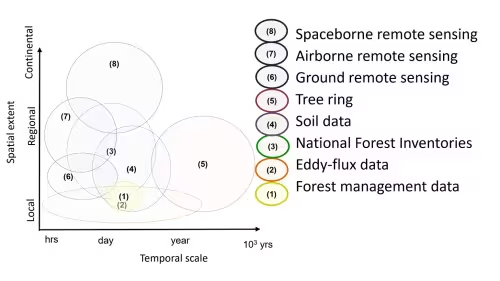
How can we monitor carbon in forests?
Effective monitoring quantifies carbon sequestration, guides policy, and strengthens the credibility of climate mitigation.
- Resilient forests