From nature restoration to national restoration plans
– What support can the latest science offer?
Photo by:
Anat art, Adobe Stock
The EU Nature Restoration Regulation (NRR), in force since 18 August 2024, setts legally binding targets to halt and reverse the decline of ecosystems in the EU. By 2030, restoration measures must cover at least 20% of the EU’s land and sea; by 2050, all ecosystems in need must be addressed. To fulfil these ambitious goals, each EU Member State must submit a National Restoration Plan (NRP) by 1st September 2026.
Forest ecosystems are an important pillar of the NRR. The regulation applies not only forests that are already under protection (e.g. Natura 2000), but all forests in the EU. Given that Europe’s forests differ widely in growing conditions, species composition, landscape and disturbance patterns, restoration plans must be tailored, forward-looking, science‑based and socially accepted.
The success of the NRR will depend on Inclusive governance, meaningful stakeholder participation, locally adapted restoration measures and the identification of sufficient and innovative financial means. Therefore, Member States will need to report on how they engage stakeholders, secure funding and monitor progress.
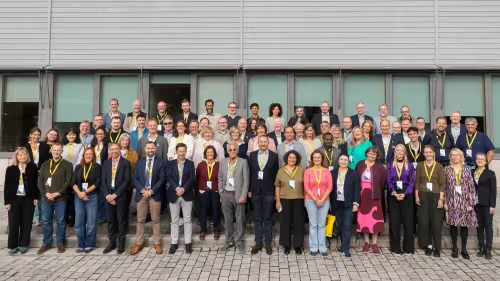
Our ThinkForest event:
- explored different drivers of forest degradation and restoration approaches, including ecological and adaptive measures
- highlighted key success factors for forest restoration like inclusive governance forms and participatory approaches
- fostered dialogue on challenges and opportunities in designing effective, realistic and synergistic NRPs
-



Florian Claeys
Jenni Roche
Łukasz Rejt
Katarina Tumpa
Related content
What role do forests play in the EU Nature Restoration Regulation?
Insights into the EU Nature Restoration Regulation
- Inclusive governance
When good forests look bad
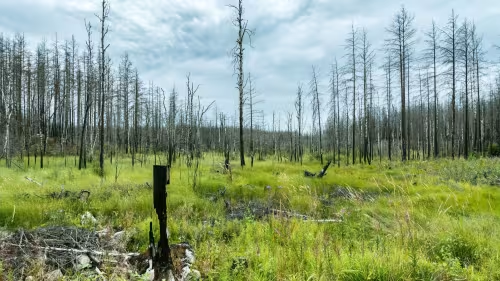
A new peer-reviewed study examines how current EU conservation status assessment methods may distort the reported condition of forest habitats.
- Inclusive governance

EFI Annual Conference 2026: from member priorities to collaborative action
The 2026 conference focused on how to strengthen member engagement and create more opportunities for collaboration across the EFI community.
- Inclusive governance