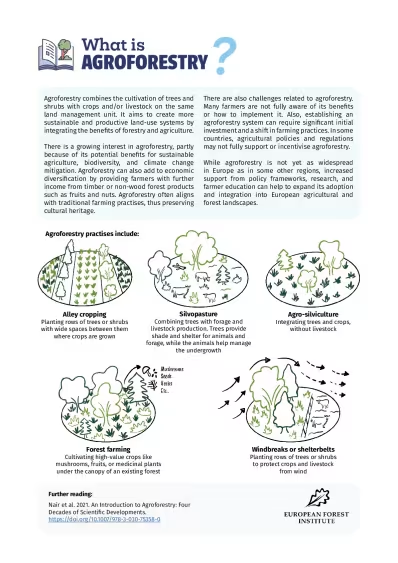
Agroforestry combines the cultivation of trees and shrubs with crops and/or livestock on the same land management unit. It aims to create more sustainable and productive land-use systems by integrating the benefits of forestry and agriculture. There is a growing interest in agroforestry, partly because of its potential benefits for sustainable agriculture, biodiversity, and climate change mitigation. Agroforestry can also add to economic diversification by providing farmers with further income from timber or non-wood forest products such as fruits and nuts.
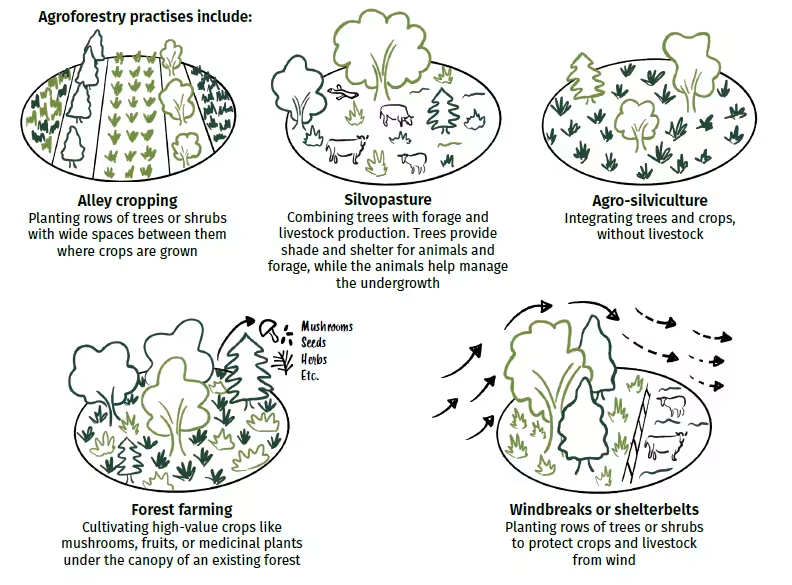
Graph by Gabriela Rueda, EFI
Agroforestry often aligns with traditional farming practises, thus preserving cultural heritage. There are also challenges related to agroforestry. Many farmers are not fully aware of its benefits or how to implement it. Also, establishing an agroforestry system can require significant initial investment and a shift in farming practices. In some countries, agricultural policies and regulations may not fully support or incentivise agroforestry. While agroforestry is not yet as widespread in Europe as in some other regions, increased support from policy frameworks, research, and farmer education can help to expand its adoption and integration into European agricultural and forest landscapes.
Further reading
Nair et al. 2021. An Introduction to Agroforestry: Four Decades of Scientific Developments.
https://doi.org/10.1007/978-3-030-75358-0

Related content
How bark beetles became a forest crisis?
Bark beetle outbreaks have become a powerful symbol of forest crisis and a visible sign of climate change reshaping Europe’s forests.
- Resilient forests
How to live with bark beetles in a warming climate?
Bark beetle outbreaks expose tensions between conservation, forest resilience, timber production and economic interests.
- Resilient forests
Why are biotic disturbances becoming a bigger threat to Europe’s forests?
A look at biotic disturbances, their current impact and the roles of climate change and human activities.
- Resilient forests