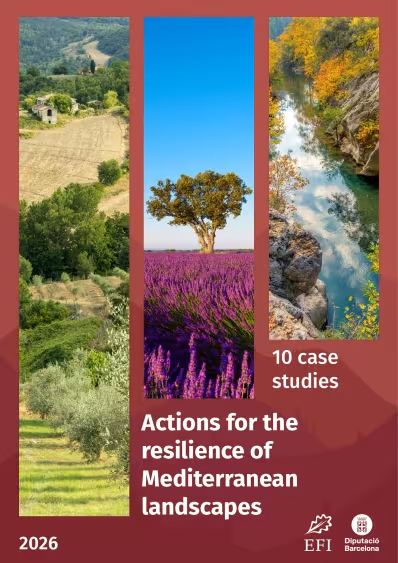
Actions for the resilience of Mediterranean landscapes: 10 case studies
Other language versions: Español Català
Mediterranean landscapes have long been shaped by traditional land management practices that created diverse, resilient cultural ecosystems, but rapid climate warming, declining rainfall, urbanisation, and land abandonment in recent decades are driving unprecedented changes. As these landscapes become increasingly vulnerable, communities must urgently adapt, ensuring that cultural practices and land use systems can withstand, recover from, and transform in response to growing climatic and socio political pressures.
This document describes 10 case studies from Mediterranean countries in Europe, North Africa and the Middle East that maintain or improve the resilience of agricultural, forestry and agroforestry systems to hazards such as fire, drought, floods, soil degradation or environmental degradation caused by previous land management. Many of these measures are not very complex, but require profound changes in land governance, and strong collaboration between land owners, local and regional authorities and agencies, research centres, NGOs, donors, and other entities involved in land management. Each case study is described in detail but concisely, including the local context, the challenge addressed, the technical, administrative and financial implementation, and how the instrument meets the four requisites for success: integration; continuity; specialisation; and collaboration.
This document is intended for land planners and land managers who are responsible for the sustainability of natural areas, including forested and agricultural spaces. The case studies were compiled by the European Forest Institute, Mediterranean (EFIMED), in collaboration with the Barcelona Provincial Council (DIBA).
More information
Recommended citation: Serrano Duque, C., Mauri, E. 2026. Actions for the resilience of Mediterranean landscapes: 10 case studies. European Forest Institute. https://doi.org/10.36333/rs16EN
Number of pages: 58
ISBN (online): 978-952-7608-15-9
-
Carlos Serrano Duque


Related content
Acciones para la resiliencia de los paisajes mediterráneos: 10 casos prácticos
Diez casos muestran cómo gestores mediterráneos se adaptan al cambio climático mediante colaboración y mejor gestión agrícola y forestal.
- Resilient forests
Accions per a la resiliència dels paisatges mediterranis: 10 casos pràctics
Deu casos d’estudi mostren com els gestors del territori mediterrani s’adapten al canvi climàtic mitjançant la col·laboració i una millor governança…
- Resilient forests
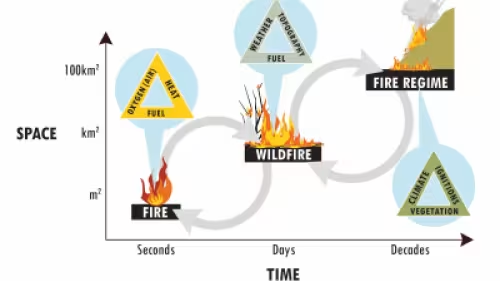
What is a wildfire?
At its most basic, a wildfire is a chemical reaction of combustion, which requires a source of heat, oxygen, and fuel to get started.
- Resilient forests