What is forest resilience?
Forest resilience is the ability of forests and society to recover and adapt to environmental, climatic and societal changes. It combines three interconnected aspects: forests' capacity to endure short-term challenges like seasonal weather fluctuations (engineering resilience), their ability to adapt naturally to long-term impacts such as climate change, fires, or pest outbreaks through shifts in species composition (ecological resilience), and the role of societies in responding to shocks like natural disasters or economic changes while still promoting sustainable outcomes (social-ecological resilience). Strengthening resilience requires actions like diversifying tree species and adapting forest management strategies to balance environmental and societal needs.
Most recent scientific advances include developing concrete steps to apply the concept in practice.
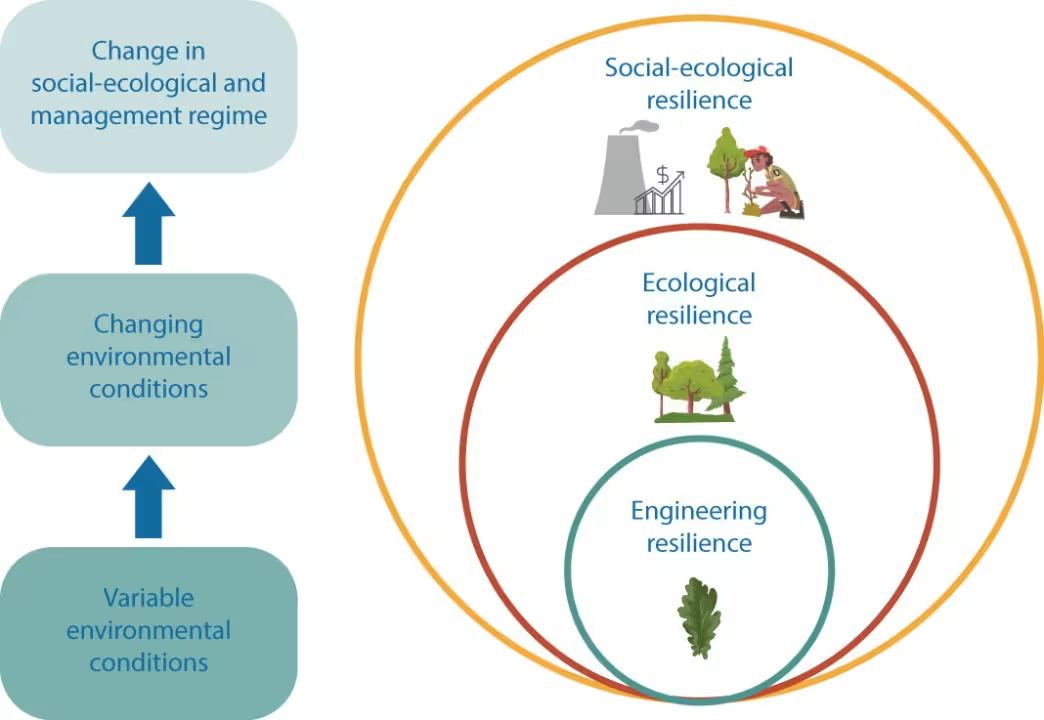
Hierarchy of commonly used resilience concepts. Modified from Nikinmaa et al. 2020.
Further reading
Lloret et al. 2024. ORF, an operational framework to measure resilience in social–ecological systems: the forest case study. Sustainability Science 19, 1579–1593.


Related content
How bark beetles became a forest crisis?
Bark beetle outbreaks have become a powerful symbol of forest crisis and a visible sign of climate change reshaping Europe’s forests.
- Resilient forests
How to live with bark beetles in a warming climate?
Bark beetle outbreaks expose tensions between conservation, forest resilience, timber production and economic interests.
- Resilient forests
Why are biotic disturbances becoming a bigger threat to Europe’s forests?
A look at biotic disturbances, their current impact and the roles of climate change and human activities.
- Resilient forests