FORESTMED 2025: strengthening resilience and cultural landscapes
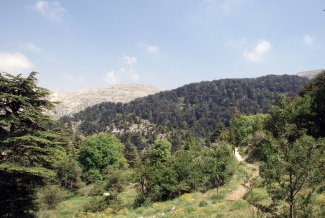
The Southern and Eastern Mediterranean region is characterised by an outstanding richness in terms of culture and ecosystems. However, the area is currently facing many intertwined social and environmental issues, including the economic and social uncertainties and the harsh consequences of climate change. Building on work carried out in 2023 and 2024, last year the European Forest Institute’s Mediterranean Facility (EFIMED) and the Barcelona Provincial Council (DIBA) Office for Development Cooperation continued their collaboration to support sustainable development, forest resilience, and cultural heritage focussing on two priority areas: Zgharta-Ehden region in Lebanon and the municipalities of Talambote and Tanaqoub in Morocco.
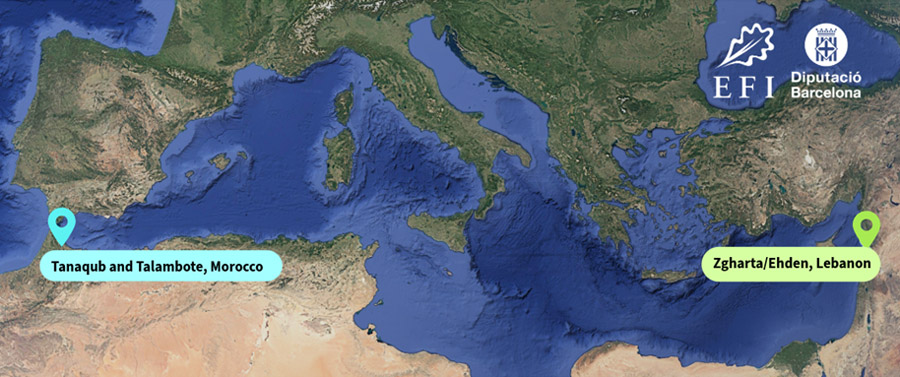
In this new phase of the FORESTMED project, activities addressed interconnected environmental and social challenges by adopting a sustainable approach aimed at preserving local natural and cultural heritage, while fostering environmental resilience and supporting socio-economic development. In practice, Lebanese municipalities were involved in initiatives to revitalise traditional local agro‑pastoral and forest practices (such as charcoal production and olive uses) that are at risk of disappearing. In Morocco, activities focused on specific social and environmental challenges, including the exclusion of women and a weakened craft sector affected by a lack of coordination among stakeholders, by valorising local carob trees and the traditions associated with them.
In Lebanon, a historic olive mill was studied for its transformation into a cultural and educational hub to foster local heritage and eco-tourism opportunities. The traditions connected with olives were also celebrated through the organisation of an Olive Festival.
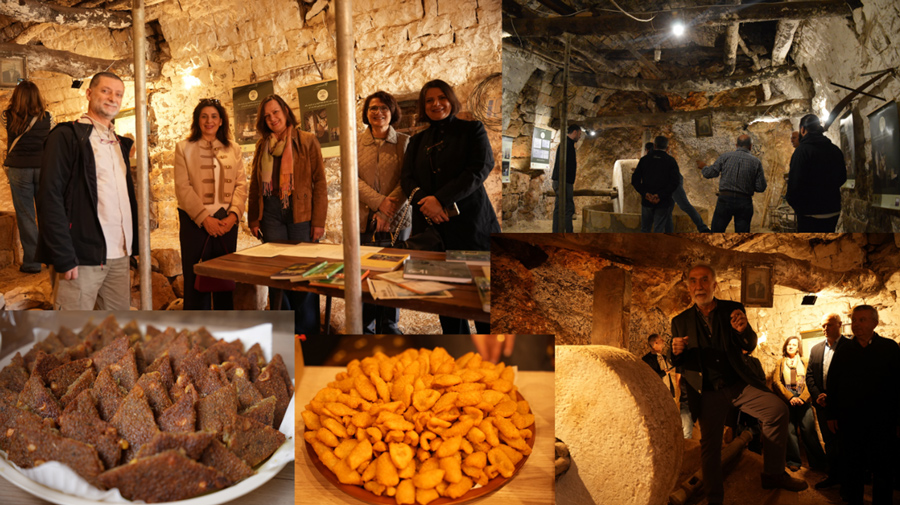
The project also involved local municipalities and communities in activities aimed at spreading awareness about other local traditional practices, such as the use of wild edible plants in traditional recipes, as well as the making of charcoal as a form of sustainable biomass management for fire prevention.
In Morocco, all the attention went to an invaluable local resource, carob trees (Ceratonia siliqua). The carob value chain in the Tanaqoub and Talambote municipalities was analysed in detail to strengthen local cooperatives and the market for carob products. In parallel, ecotourism circuits were also designed, complemented by training sessions for local guides to promote heritage interpretation and responsible tourism.
We are looking forward to sharing what the partnership between EFIMED and the Barcelona Provincial Council will bring in 2026. In the meantime, have a look back at the 2023 and 2024 projects!