Navigating EU Forest Objectives: ThinkForest event explores how to turn complexity into coherence
Forests lie at the heart of many of the European Union’s strategic ambitions, such as achieving climate neutrality, safeguarding biodiversity, strengthening rural economies, and supporting the bioeconomy. Yet as expectations for forests multiply, so does the complexity of governing them.
This was the key message emerging from the European Forest Institute’s latest ThinkForest event, “Navigating through the EU forest-related objectives”, held on 10 December 2025 in Brussels. The event brought together 54 policymakers, researchers, national representatives, and stakeholders to discuss new evidence on forest-related objectives in EU policy.
Dr Doris Wydra, lead author of EFI’s study (forthcoming) and related policy brief Mapping the EU’s forest policy objectives: From multifunctionality to forests in a circular bioeconomy, presented the study’s results which was based on the analysis of 90 documents and policy instruments from 1992 to 2024. The analysis identified 567 forest-related objectives which cluster into 15 overarching policy objectives with those on climate adaptation and economic profitability outstanding.
According to Wydra, ambitions increased sharply with the arrival of the European Green Deal, which reflects forests’ expanding role as “multifunctional allies” in tackling climate, biodiversity and economic challenges. “When reading EU documents, it can appear as though everything is harmonious,” says Wydra, “but objectives do not automatically create synergies, and some may pull in different directions.” Many objectives remain non-binding, she pointed out, and enforceability requires clarity, which is something often lacking in the accumulation of policy statements. The analysis also highlights that environmental ambition is increasingly framed as a driver of economic productivity, with climate, ecological, and economic goals often developing in parallel rather than in conflict.
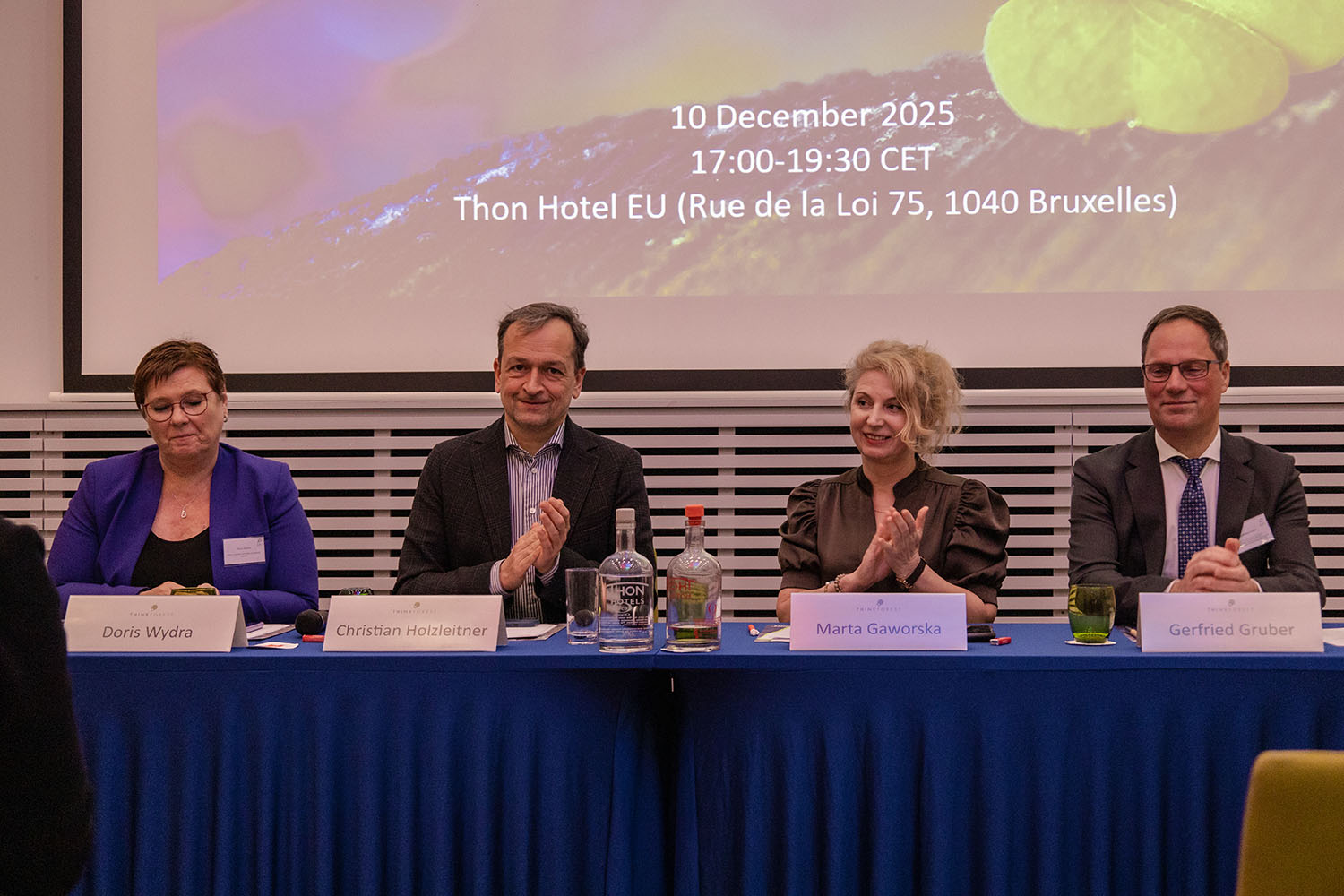
During the panel discussion session, moderated by Sarah Adams from EFI, panelists agreed that while the EU has become more ambitious, translating objectives into practice remains challenging. Implementation must account for highly diverse national contexts, from ownership structures to forest types and management traditions.
Christian Holzleitner, DG Clima, emphasised the potential of the bioeconomy value chain, carbon certification, and incentives to address trade-offs and support climate goals.
Marta Gaworska, Permanent Representation of the Republic of Poland to the European Union, stressed the need for realistic, implementable objectives. She also advised that rising expectations must be grounded in what Member States can deliver.
Gerfried Gruber, Ministry for Agriculture, Forestry, Climate and Environmental Protection, Regions and Water Management, Austria, highlighted the importance of a continuous dialogue with different stakeholders, as well as aligning EU-level initiatives with on-the-ground realities. Gruber shared Austria's experience in aligning national strategies with EU-level initiatives while respecting local contexts.
The discussion further explored opportunities for strengthening policy coordination without expanding EU competences. Suggestions included better use of shared monitoring systems, more transparent communication of trade-offs, and cross-sector collaboration, particularly between climate, agriculture, and environment portfolios for more holistic approaches. “There's no one-size-fits-all solution,” Gruber noted, “but collaboration between Member States at the EU level can help us learn from each other.”
In her closing words, Helga Pülzl, Assistant Director of EFI for policy support, summarised the evening’s insights:
- Togetherness: working collectively across governance levels, sectors, and actors; the results of the EFI study have the potential to create transparent oversight and unlock coordination.
- Coherency and incentivisation: aligning forest-related objectives to reduce fragmentation, as well as aiming to engage forest owners / managers through creating the right incentives. In this way they can remain central in the transition.
- Simplexity: striving to make complexity manageable and forest objectives accessible including in implementation. Simplifying complexity should, however, not lose sight of who benefits and of what citizens in Europe want.
The event closed with a very engaged networking session where discussions continued. This reflected a shared recognition that achieving the EU’s forest ambitions will require cooperation, clarity, and continued dialogue.
More information
Doris Wydra, Helga Pülzl, Alessandro Matrone. 2025. Mapping the EU’s forest policy objectives: From multifunctionality to forests in a circular bioeconomy. EFI Policy Brief 18. European Forest Institute. https://doi.org/10.36333/pb18
Photo: Raghav Sharma, European Forest Institute