Shaping the sustainable bioeconomy: the BIOEAST Student Challenge opens for applications
Students in Central and Eastern Europe can pitch sustainable bioeconomy ideas in the BIOEAST Student Challenge. Apply by 31 July 2026.
- Sustainable economy

Students in Central and Eastern Europe can pitch sustainable bioeconomy ideas in the BIOEAST Student Challenge. Apply by 31 July 2026.
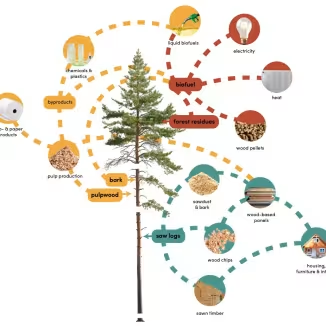
Harvested wood products (HWPs) consist of biobased materials, primarily wood sourced from forests.
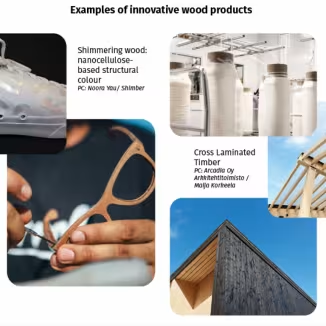
Innovative wood products use advanced processing and bioengineering to create more sustainable, functional, high-value materials from wood.
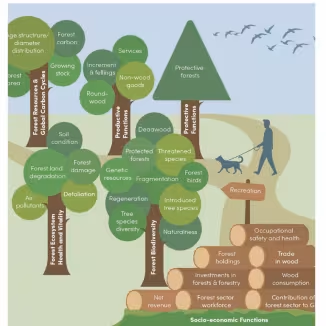
Indicators for sustainable forest management (SFM) are measurable characteristics which support decision-making on forests and their management.
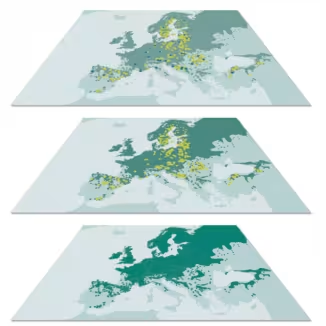
Europe’s forest genetic diversity is safeguarded by the Pan-European GCU network through designated Genetic Conservation Units.
At its most basic, a wildfire is a chemical reaction of combustion, which requires a source of heat, oxygen, and fuel to get started.
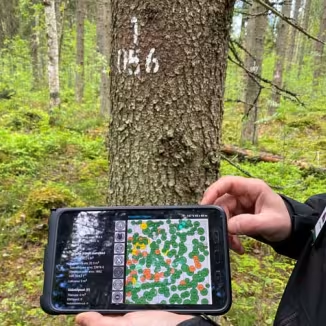
Marteloscopes are used to perform (virtual) tree selection exercises and help to compare alternative forest management strategies.
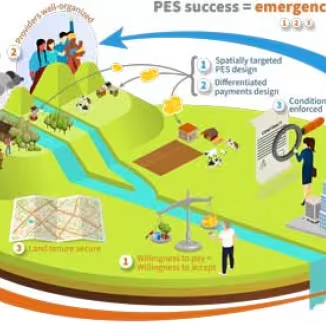
PES constitute a potentially integrated financing and incentive mechanism to improve the environmental quality of natural resource management.
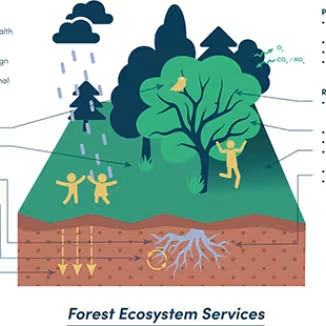
Ecosystem services refer to the benefits humans derive over time from natural or near-natural systems and processes.
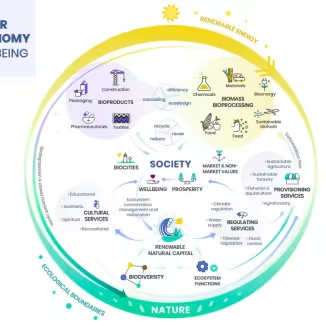
Forest bioeconomy promotes resilient, circular and climate-smart forestry within ecological boundaries and for wellbeing.