Forest research and resilience in focus at EFI Mediterranean Network Forum 2026
Researchers, policymakers, practitioners and institutions from 28 Mediterranean countries and beyond gather at EFI Mediterranean Network Forum in Valencia to address shared challenges for Mediterranean forests.
Valencia, Spain, is hosting EFI Mediterranean Network Forum, an international event on Mediterranean forests bringing together experts from across the Mediterranean region to foster interdisciplinary dialogue, knowledge exchange and international cooperation in response to shared global challenges such as climate change, sustainable forest management, biodiversity loss and landscape resilience. The event is organised by the European Forest Institute (EFI), in collaboration with the Spanish Agency for International Development Cooperation (AECID) through the Masar al’an programme for regional cooperation with the Arab World, the Centre for Forestry Research and Experimentation (CIEF), Universitat Politècnica de València (UPV), Generalitat Valenciana, and with the support of the Foundation for the Internationalization of Public Administrations (FIAP), and with the support and participation to the Opening Session to Felipe Pérez Martín, Deputy Directorate General for Forest Policy and Desertification Combat at the Spanish Ministry for the Ecological Transition and Demographic Challenge and to Eva Ortega, Secretary General for Research, at the Spanish Ministry for Science, Innovation, and Universities.
The opening on March 23rd is attended by Eva Ortega, Secretary General for Research, from the Spanish Ministry for Science, Innovation, and Universities, and representatives from the Spanish Ministry of Ecological Transition and the Demographic Challenge, the Generalitat de Valencia, the Generalitat de Catalunya and host institutions. This highlights the important bridge events like this create among research, academia, environmental policy and sustainable territorial development and reflects Spain’s longstanding commitment to Mediterranean forestry, as the Spanish government has played a fundamental role in supporting the EFI’s Mediterranean Facility (EFIMED) since its establishment in 2007.
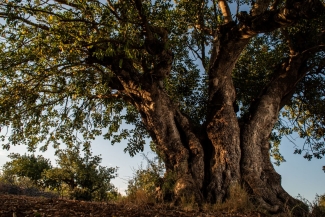
Throughout the week (23–27 March), the programme will feature scientific sessions, policy dialogues, a collaborative hackathon, and the Carob Days workshops (25-27 March), alongside two field visits, one on watershed management and one on monumental carob trees and carob industry in Chiva. The Forum will review progress on the Mediterranean Forest Research Agenda 2030, strengthen collaboration across the forest community, foster dialogue between science, policy and practice, and engage youth in shaping the future of Mediterranean forests.
“In periods of rapid climate change, there are always winners and losers”, says Professor Magda Bou Dagher Kharrat, Lead of the EFIMED and one of the Forum’s organisers. “The Mediterranean is a climate hotspot, warming nearly 20% faster than the global average with real consequences for people's lives and economies across the region. Mediterranean forests can change that equation. By conserving and restoring them, strengthening their capacity to adapt, and rethinking our economic models by climate-adapted materials and innovative approaches, we can turn risk into opportunity. Achieving this at scale requires mobilising science as a bridge for cooperation and diplomacy across the region. Scientific knowledge, technology and innovation are our tools. The priority now is to make them accessible, applied and impactful. Where gaps remain, we must tackle them together and this is the purpose of the Forum”,
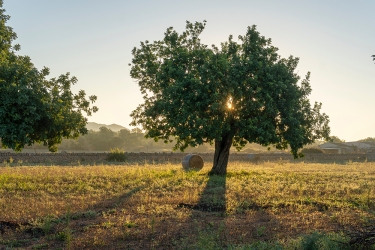
The Carob tree (Ceratonia siliqua) is in focus with the Carob Days (25-27 March), a three-day long workshop on one of the most resilient tree species in the Mediterranean region and a symbol deeply rooted in the traditions of many communities. The workshop explores carob’s resource potential, market development and trade opportunities, as well as its cultural and natural heritage.
Within the Forum, a new important project and network will be launched: the Mediterranean Forest Genetic Resources Network (MEDFORGEN), a collaborative effort to safeguard the genetic diversity of forest ecosystems and forest genetic resources (FGR) across the Mediterranean region, led by EFIMED. The project, funded by the European Union, includes ten countries in the EU Southern Neighbourhood: Algeria, Egypt, Israel, Jordan, Lebanon, Libya, Morocco, Palestine, Syria, and Tunisia.
EFIMED’s commitment to sustainable development is indeed at the heart of the Forum itself, and bolstered by the collaboration with AECID. “The Spanish Cooperation Master Plan for Sustainable Development and Global Solidarity 2024-2027 organises the action of Spanish Cooperation around a triple transition — social, ecological, and economic — as an integrating framework,” explains Luisa María García García, Deputy Director for Cooperation with the Arab World and Asia at the AECID. “The central themes of this Forum (forests, biodiversity, agri-food value chains, watershed management, climate resilience) lie at the heart of this triple transition.” .
The full programme of the EFI Mediterranean Network Forum with all sessions and activities is available at https://efi.int/efimed-network-forum-2026/programme.
For more information on MEDFORGEN, please visit: https://efi.int/projects/medforgen-mediterranean-forest-genetic-resources-network
Photo: Centre for Forestry Research and Experimentation (CIEF)