Photo by:
Vivaan Trivedii
Publication series
From Science to Policy
Robust, relevant, and timely knowledge combined with scientific analysis providing evidence-based information to support policy action.

EFI Policy Briefs
Concise analysis of key issues and policy implications, translating scientific evidence into actionable pathways.

Knowledge to Action
Visually rich, with graphics and examples, bringing a wide range of research, projects and initiatives on forest-related issues closer to society.

What Science Can Tell Us
Collective scientific expert reviews providing interdisciplinary background information on key and complex forest-related issues.

All publications
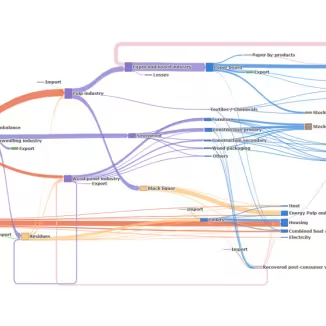
aiphoria: A Python package for dynamic wood material flow and carbon stock analysis
aiphoria is an open-source Python package for dynamic material flow analysis (DMFA) of
wood.
- Sustainable economy
Wood type influences tree responses to recurring hot and dry summer tree water deficits across European forests
Article shows that wood type and its associated functional traits influence tree responses to recurring stem dehydration periods.
- Resilient forests

Annual Report 2025
Explore EFI's 2025 achievements, impact, partnerships, and key milestones shaping forests, sustainability, and society.
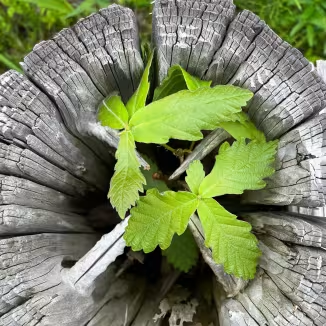
Interdisciplinary insights on climate-smart rewilding
Lessons from 30 years of rewilding show how adaptive thinking, policy support and partnerships can drive climate resilience and biodiversity.
- Resilient forests
Forest Innovation Readiness
A self-assessment catalogue for innovators, start-ups, self-disrupting companies, and researchers-turned-entrepreneurs in the forest-based bioeconomy.
- Sustainable economy

Wildly diverse: How Europeans vary in their views on forest landscapes
Do Europeans prefer wild or cultivated forests? A pan-European survey shows preferences vary by age, gender, place of residence, and region.
- Forests and people
Guide de bonnes pratiques sylvicoles
Ce guide est décliné sous forme de fiches techniques dédiées aux divers peuplements forestiers rencontrés sur le terrain.
- Resilient forests
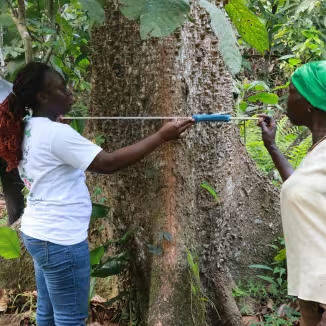
Healthy Cities by Nature: How urban nature can become public health infrastructure
This brief examines how urban green spaces protect public health and how cities can embed nature into everyday planning, services, and education.
- Cities

How can we conserve primary and old-growth forests through the EU Nature Restoration Regulation?
The EU Nature Restoration Regulation could help conserve Europe's last primary and old-growth forests.
- Resilient forests
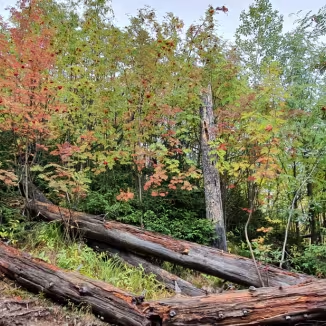
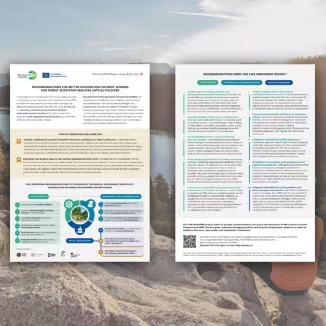
Recommendations for better integrating payment schemes for forest ecosystem services into EU policies
Why is uptake of forest payments for ecosystem services still low in Europe? Few measures, limited enrolment and insufficient incentives.
- Inclusive governance